Crawlies with Cri – Arctic Skipper

By Christy Solo – ONPA 1st Place Award Winner for Best Local Column

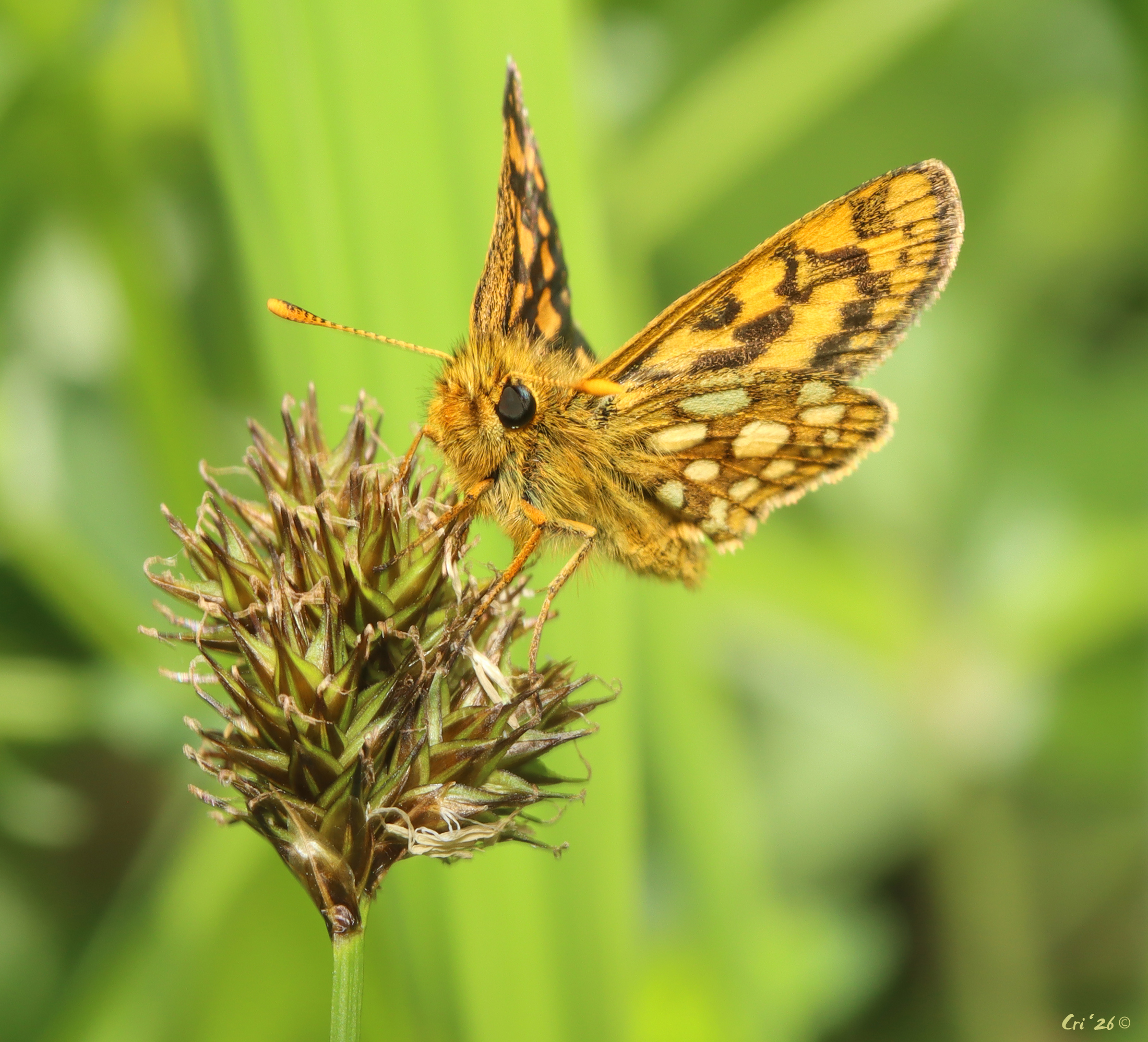
This week we’ll meet a very rare Oregon resident. The upside is if you do see one, you’ll know it right away! Meet the Arctic skipper (Carterocephalus mandan).

What’s in a name? The common name of this skipper is quite misleading. True, they are a very northern skipper, but they don’t actually live in the Arctic. In North America they live from Central Alaska south to central California, south in the Rocky Mountains to northwest Wyoming, east across the Great Lakes states to New York and New England.

They also live across the pond in Scotland where they are called Chequered skippers. In North America we already have a Checkered Skipper so someone decided to go with “Arctic.”

We’ve said it before, but it bears repeating, common names can be very confusing.

The Arctic’s unique colors and pattern do go a long way to prevent them from being confused with other local skippers, however.

So, the reason why so few have been recorded in Oregon is not because they are easily overlooked.

How few sightings do we have?

There are two recorded sightings on BugGuide, zero recorded sightings on iNatualist and nine recorded sightings on Butterflies and Moths.org. Some of those overlap (are the same sightings on different websites). We can add a +1 to our total because our pictured Arctic hasn’t been recorded yet. Even with a “hefty” 10 or so recorded sightings in Oregon, Arctic skippers are firmly in the “hen’s teeth” category of local crawlies.

Luckily for us, six of the nine Oregon sightings are in either Jackson or Douglas counties, so these rare beauties love our area, and who can blame them?

Arctic skippers are also creatures of habit with specific habitat needs, so they aren’t skippers that will pop up just anywhere – again lucky for us.

They need glades and openings in heavily forested woods, moist meadows and streamsides. This is exactly where our pictured skipper was found, in a small open glade, streamside in the Rogue River National Forest.

But wait, there’s more. Arctic skippers are really persnickety! For their nectar needs, they go for purple flowers, almost exclusively. They also like wild iris. You guessed it! Our streamside glade had both pretty, pale purple American vetch (Vicia americana) and yellowleaf iris (Iris chrysophylla). Our skipper couldn’t have found a more perfect spot if they’d custom ordered it.

There is one more thing the particular Arctic skippers need – grasses. Their caterpillars feed on grasses and bromes exclusively. The host plant most likely to be near our skipper’s perfect glade is mountain brome (Bromus carinatus).

Fun fact: Our skipper is perched on the top of smallwing sedge (Carex microptera) so it’s not useful as a foodplant but made a nice perch for this (most likely) male to survey his turf for ladies and/or male interlopers (can’t imagine there would be many!)

When our Mr. does find a Ms. she will lay her eggs one at a time on individual grass leaves.  Caterpillars live and feed within nests of silked-together leaves; fully-grown caterpillars overwinter in their nests and then in the spring they will molt to chrysalis form and hatch out in late May or early June.

book plate of the life cycle of an Arctic skipper caterpillar.
Plate of the lifecycle of an Arctic skipper caterpillar. from “The larvæ of the British butterflies and moths” by William Buckler 1886. Public domain photo

Imagine how tough those little pillars are to overwinter in a grass leaf enclosure through a Cascades winter!

Even though Arctic skippers are small (1 ¼”) and rare here, it would seem they’d be easy overlook. However, their bold orange spotted upper wings and cream spotted underwings really make them stand out.

three up collage of macro photos of three area skippers with faint markings.
Some local skippers you cannot confuse with an Arctic skipper. Top: Woodland skipper. Bottom left: Western branded skipper. Bottom right: Sachem skipper. Photos by Christy Solo

As we mentioned earlier, those same unique colors and patterns also make it easy to identify them as “not one of our typical muted pattern orangey-brown” skippers. So have hope, keep your eyes peeled and you might luck out and spot one of these rare beauties.