Crawlies with Cri – Mesh web weavers

By Christy Solo – ONPA 1st Place Award Winner for Best Local Column

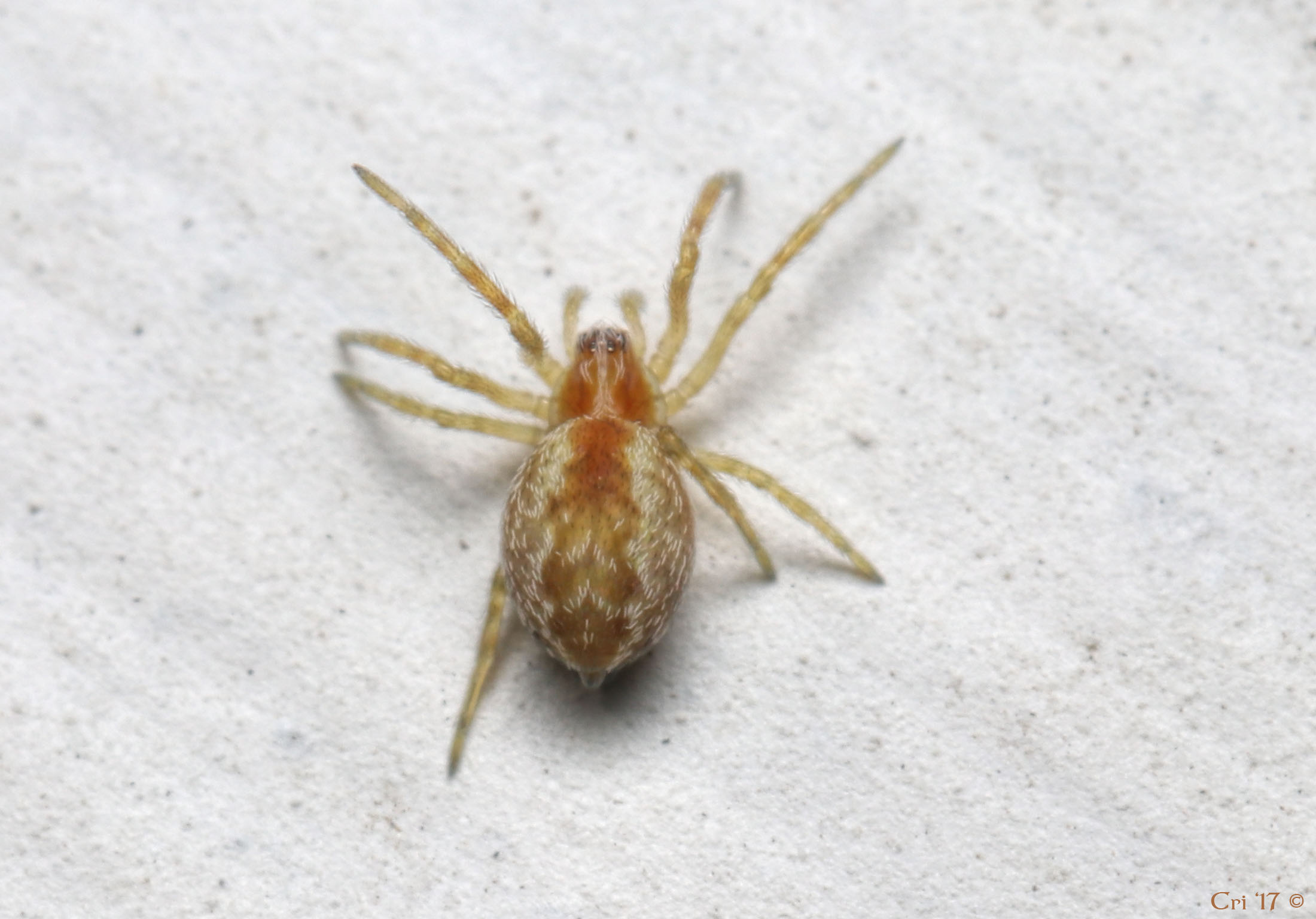
This week’s crawly is the personification (arachnification?) of the Itsy-Bitsy Spider. No doubt they’d climb right back up the waterspout if washed out. Meet the Family Dictynidae (dic-tin-eh-day)AKA Mesh Web Weavers. We’ll call them Dic-teeny spiders for the duration because it’s easier to spell and accurate.

How teeny is teeny? There are 17 genera of dicteenies in North America and nearly all the species in all those genera are less than 4mm (.16”) in length. To help you visualize – grab a quarter – we’ll wait.

Got it? Now look at George Washington’s nose, tiny right? An entire dicteeny spider can fit on that nose!

Fun fact: Even though dicteeny spiders are just about everywhere in the U.S. they aren’t heavily studied. In part it’s because they are wickedly tricky to ID to species. Even though they come in a range of hues, from dark brown, to blue-black, to orangey-orange a dicteeny of any color could be one of any number of species.

four up collage of macro photos of small spiders. in various colors.
Dictynae Spiders pack a lot of pretty in their teeny bodies and come in a wide variety of rich colors. Most species have similar abdomen patterns. Photos by Christy Solo

With scads of species, there are a handful which are ID-able on sight. Those genera tend to have super cool names too, such as Genus Califorenigma and Genus Tolkienus. As the name implies Califorenigma have (so far) only been found in Cali, but Oregon is so very much like Middle Earth, that we do have one species of Tolkienus here in our area.

Now, let’s dig into their “mesh web weaver” moniker!

Warning: Science Content Ahead!

But it’s so cool – don’t panic!

All mesh web weavers weave mesh webs (say that 10 times fast!) However, some are cribellate and some are ecribellate.

Crib belly ate what now?

Fun fact: There are two types of spider webs, those which are naturally sticky (ecribellate) and those which are “mechanically” sticky (cribellate).

All of our pictured dicteenies weave the mechanically sticky type of web. This means the web comes out of their spinnerets like yarn – toss some confetti at a clean strand of yarn and it won’t stick. Now, if you frizz up the yarn with a small brush and toss the confetti at it again – voila! The confetti sticks.

That is literally what cribellate dicteenies to so their mesh webs will hold on to their prey. The spiders have small comb-like structures on their legs; they use these to back-comb the web as they spin it turning the smooth silk into a meshy fuzz.

Because their mesh is messy, unlike sticky-but-organized orb webs, dicteenies don’t clean house as it were. They just leave the empty husks of their digested arthropod dinners strewn about their webs.

The mesh webs are so effective, they catch far more arthropods than the dicteenies can possibly eat, making them double-bonus webs. First, they serve as pest control nets far beyond what an army of spiders could chow down on. Second, they become an all-you-can-eat buffet for hungry birds.

Pictured is a juvenile House Sparrow picking a passel of leftovers out of an array of dicteeny webs on my window. Pacific Wrens, dark-eyed juncos and other species of birds make excellent use of mesh webs too, especially in wintertime when fresh arthropods are fewer and further between. Dicteeny webs will always catch whatever is around no matter the season.

Fun fact: Typically dicteeny spiders build webs on plants, however southern facing windows provide a bountiful buffet and dicteenies take full advantage of that.

So many fun facts about our itty-bitty dicteenies! Imagine what we may one day learn when arachnologists have more time to really dig in and study them!