By Christy Solo – ONPA 1st Place Award Winner for Best Local Column
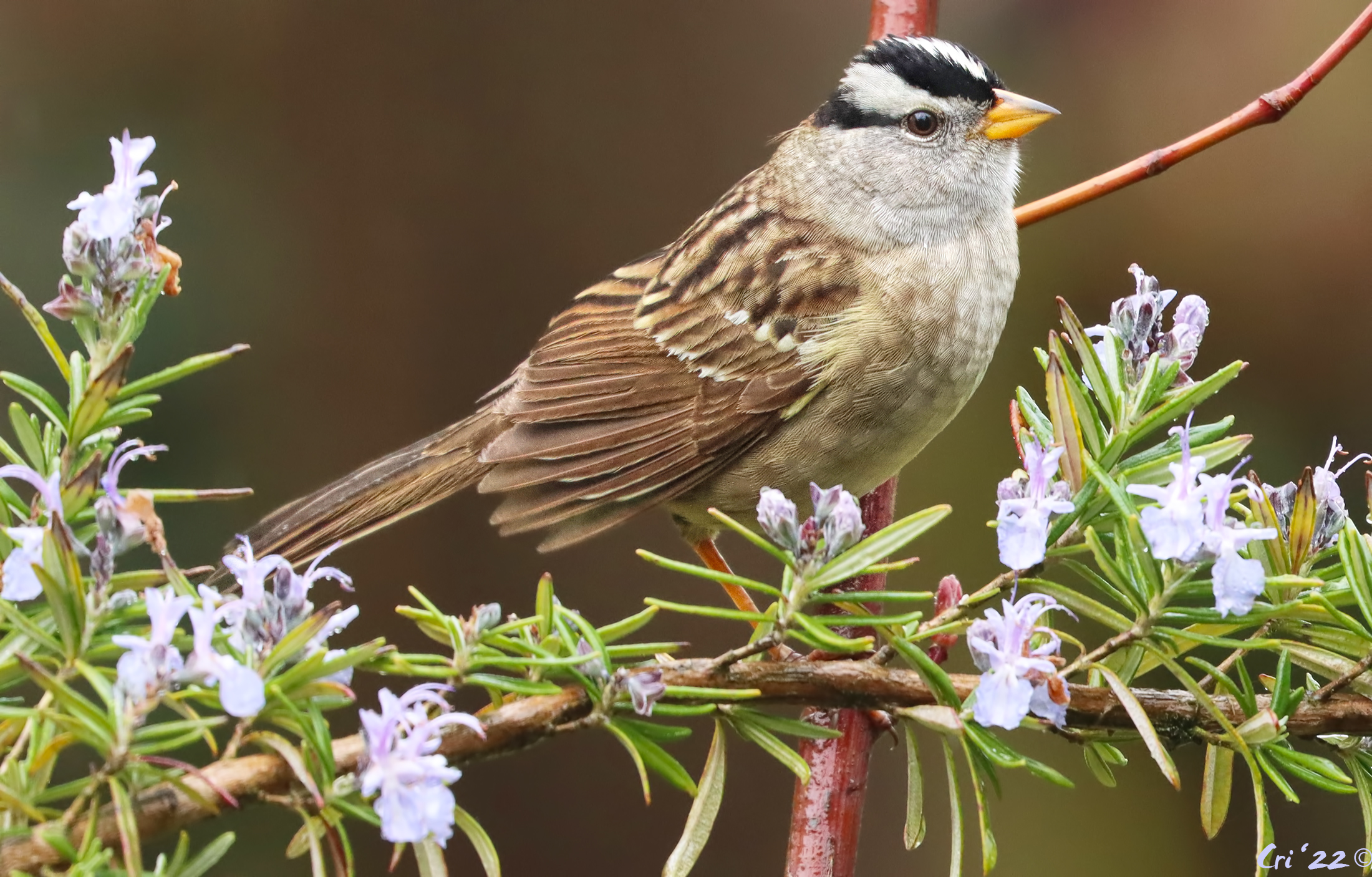
With bird Migrationpalooza happening right now we can’t think of a better time to introduce this week’s crawly, a beautiful bird indeed. Meet the White-crowned Sparrow (Zonotrichia leucophrys).
Don’t tell all the other sparrows, but white-crowned probably would win all the Sparrow Beauty Pageants.
This is the perfect time to meet them too, because now is the time you can actually see them in our area. “Our area” being north of Hwy. 234. South of 234 folks may see white-crowned sparrows all winter, but north of the highway there’s just a brief window of observation in fall and then again in spring.
If you really want to see a white-crowned and don’t want to count on one showing up in your yard, head up to Medco A at Lost Creek Lake, along the shore, just south of the marina. That is an eBird HOT spot for white-crowned right now!
As with many birds, the best way to see a white-crowned is to learn their song – it’s very distinct! You can listen to it on Cornell’s All About Birds website. If you hear their song in your yard, sprint outside for a sighting.

Fun fact: They’ll sing their song more during spring migration, but sometimes they just can’t help but to whistle a merry tune in fall.
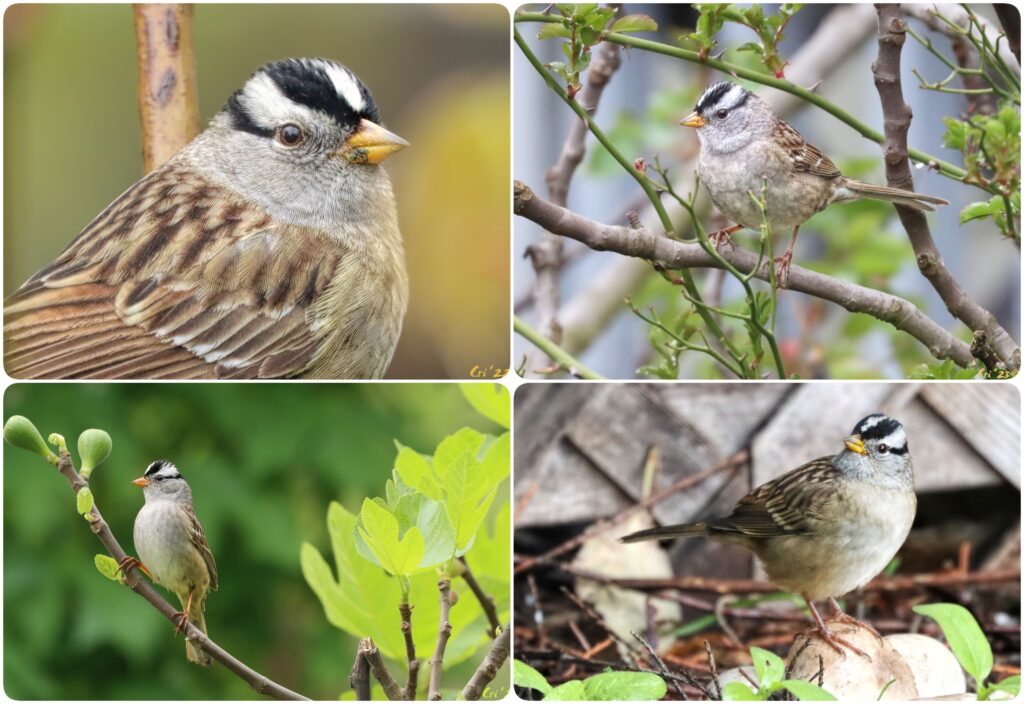
Luckily with their crisp white crown, white-crowned sparrows are easy to spot even as they hop about in and under trees and shrubs. Like most of their sparrow cousins, white-crowned are ground feeding birds, so scatter some seed on the ground around your shrubs to woo them to your yard.
White-crowned will happily hang out with our other sparrows such as golden-crowned, song, juncos and towhees so keep an eye on those mixed flocks of peppy little birds.
Fun fact: During migration, and over winter, white-crowned sparrows share space with all the sparrows, but up north during breeding season they chase juncos and chipping sparrows – and those sparrows only – right on out of their territory. We can only guess that juncos and chipping sparrows “know what they did to deserve it.”
These pretty sparrows spend summers up north (though there are isolated year-round populations in Oregon) and winter throughout the United States. If you don’t catch a glimpse of one over the next few weeks, you can just head south a bit and look for one any time between now and April.
Fun fact: Sometimes you may spot a not-yet-white-white-crowned sparrow. Immature birds have tan colored heads with warm brown stripes. You may see quite a few of the tan/brown white-crowned right now as adults will have between 1 and 3 broods over the summer with 3-7 eggs per brood!
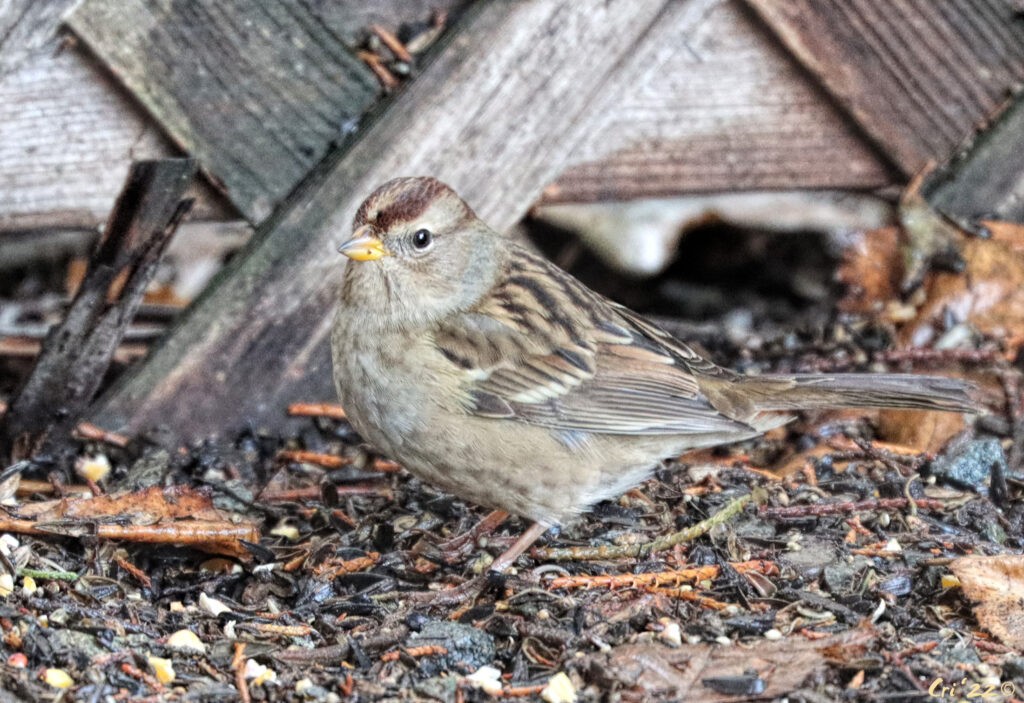
Mated pairs split up during winter, and all the sparrows hang out as a flock, but when they get back to their breeding grounds next summer two-thirds of 2026 pairs will pair up again. Male and female white-crowned look alike to us, but they sure can tell each other apart.
You can also look for white-crowned on blackberry and other berry bushes in fall and winter. During the summer they chow down mainly in insects; caterpillars, wasps, beetles and others, but in winter they go in more for seeds and berries. Also look for them hop, hop, hopping backwards in leaf litter to scare up arthropods. If they uncover a bug, they’ll then hop forward and pounce on it!
Speaking of singing…okay we’re past that, but – we flew right past our discussion on their song without dropping this super fun fact! Male white-crowned do most of the singing, though females will sing too, especially around their breeding territory.
But wait! There’s more! Young males learn the root of the song they will sing as an adult during the first few months of their lives. They aren’t schooled in song by their fathers or mothers but learn the generalized “song of their people” sung by all the white-crowned in their immediate area.
Final fun fact: Boy are these newly arrived white-crowned hungry! Why? Some white-crowned sparrows travel up to 2,600 miles from summer to winter territories. One white-crowned was tracked flying 300 miles in a single night!
Not only are white-crowned (arguably) the prettiest sparrows around, but they are tough little birdies as well.