By Christy Solo – ONPA 1st Place Award Winner for Best Local Column
This week’s crawly falls under the “Look DON’T TOUCH” category. We’ll also add that eating one would be even worse – not that you’d be tempted – but stay away from the “double dog dares” with this critter.
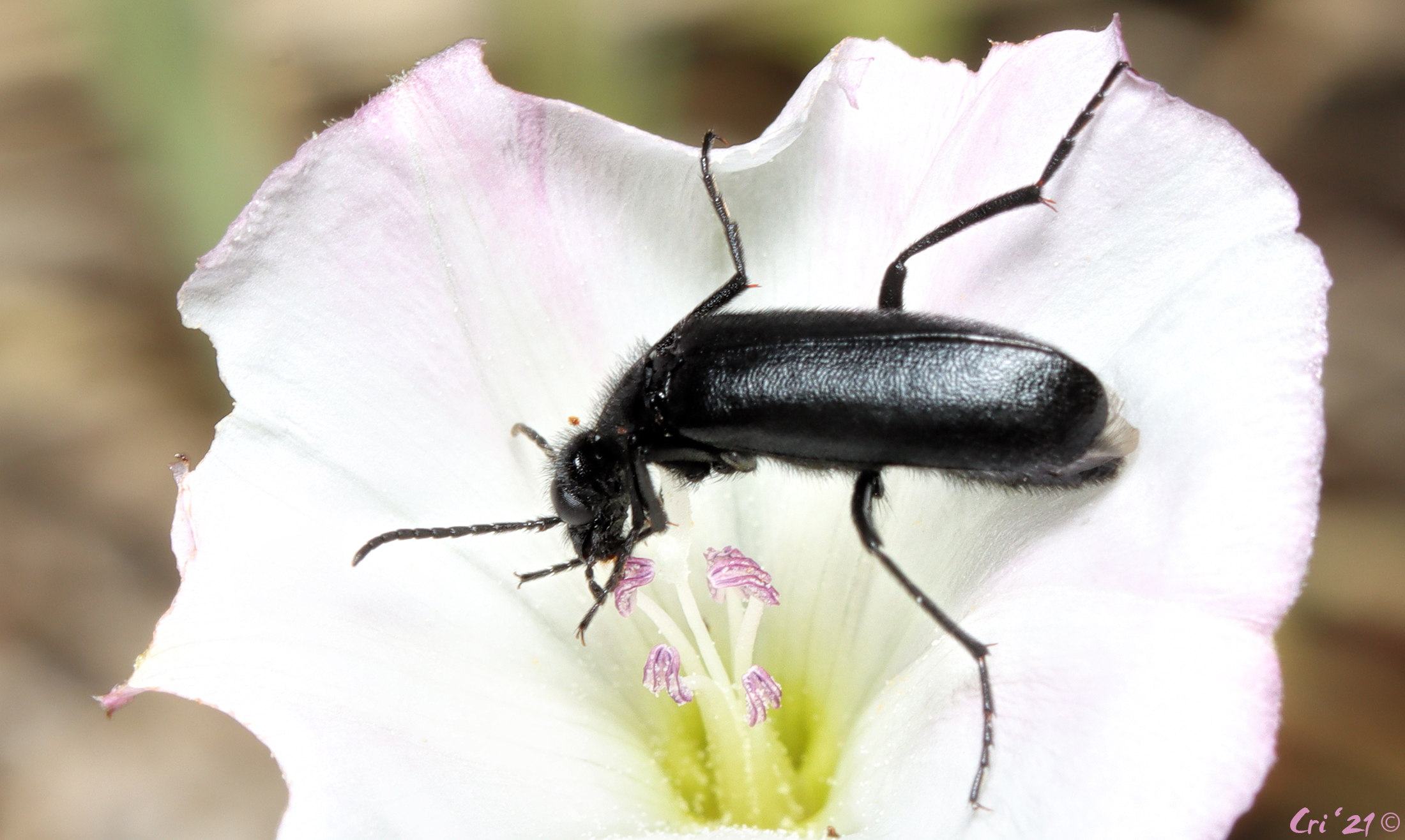
Meet the Punctate Blister Beetle (Epicauta puncticollis), we’ll call them “punc” for short.
What’s in a name? We’ll start with the “punctate” portion of their name; it means “having minute spots or depressions” and comes from the Latin pūnctātus meaning “dotted.”
While it may seem odd that a “none more black” beetle has a dotted moniker, if you look at the pronotum (bit between the head and body) of our pictured punc on a purple aster, you can see it does indeed have “minute depressions.”

That said, another common name for puncs is “black blister beetle” going for the more obvious and easy to see key feature.
Onto the “blister beetle” part of the common name. Blister beetles (Family Meloidae) come by that name honestly. Puncs and all their relations have one of the coolest natural defense systems ever (assuming you aren’t on the receiving end).
When threatened, blister beetles pop their knee joints and exude cantharidin which is a poisonous chemical that causes painful (burn-like pain) blisters on the skin. If untreated the blisters can become infected.
Cantharidin is toxic to people, horses, cattle, sheep, goats, dogs, cats, rabbits and rats. If eaten it irritates the stomach lining, small intestine, bladder, and urinary tract and reduces the calcium level in the blood and can cause death.
Horses are the most susceptible to “death by cantharidin.” Horses don’t go around actually eating the beetles, but some species of blister beetle (not puncs) feed on alfalfa and if they are crushed into hay bales, then eaten by horses problems ensue. Even if only the beetles’ toxic blood remains on the hay, it can be deadly.
But don’t panic, there are numerous resources with pro tips on “keeping blister beetles out of your hay.” We won’t dig too deeply into that, but there are some fun facts which make it pretty easy to do.
First, blister beetles who favor hay tend to show up en masse, hang out for a bit then fly away, making it easy enough to just wait them out.
Second, blister beetles tend only hang out on the outer edges of fields (we’ll get to why in a bit) so farmers can just leave them to it and avoid harvesting the edges.
Fun fact: Despite their toxicity, blister beetles are beneficial insects. Let’s get back to puncs to learn more.
While we do have a handful of blister beetle species in Oregon, puncs are the ones we have the most of, so the ones you’re most likely to see. You won’t see them hanging out on alfalfa because they go in for pollen in a big way.

Adults of some blister species chow down on flowers and leaves, but puncs prefer pollen. As you’ve no doubt already guessed, this makes them pollinators but that’s only one half of their benefits.
Their biggest benefit is control of species who can be major pests if their numbers aren’t controlled. While adult puncs love pollen, the main food source of baby puncs (larvae) is grasshopper eggs.
Female puncs lay their eggs on the ground and when they hatch, the young burrow in and find clutches of hopper eggs. They may need to find a few before they bulk up enough to morph into their final larval form. Then they’ll overwinter underground and emerge the following year when there are enough pollen producing flowers to feed the winged adults.
Fun fact: The larvae of most blister beetle species eat grasshopper eggs, even if the adults have different diets. This is why adults can often be found on the edges of crop fields; they’ve hatched out from fields where there were numerous grasshoppers the previous year. This also means there won’t be numerous hoppers the year they hatch. Beneficial!
If you want to see a blister beetle (from a respectable distance) this year, keep an eye on flower blossoms from now until August. While most any bloom will do, puncs prefer flowers in the aster family and they sure have a lot of options for that flower family here in our area.