Crawlies with Cri – Red-shouldered Hawk

By Christy Solo – ONPA 1st Place Award Winner for Best Local Column

This week we take wing with one of our local more-often-heard-than-seen hawks. Meet the red-shouldered hawk (Buteo lineatus).

Red-shouldered are medium-sized (raven-sized) hawks who hang around mostly unnoticed during the winter months, but they announce themselves loudly and constantly as the weather warms and breeding season begins.

In our area they are particularly vocal from Feb. – April as they establish their breeding territories, loudly. You can hear their calls on Cornell’s All About Birds website here. Both male and female red-shouldered make their presence known.

photo of a red-shouldered hawk and a raven in an aerial battle.
One of a pair of Red-shouldered Hawks defending their territory against a Raven. Photo by Christy Solo

Red-shouldered hawks don’t just sit around and yell about their personal space, though. They will fiercely defend it against potential nest predators such as crows, ravens, great horned owls and even the larger red-tailed hawks. This makes for some spectacular aerial battles.

photo of a red tailed hawk and red shouldered hawk soaring through trees.
Who’s chasing who? Red-shouldered (bottom) was chasing Red-tailed (dark morph) out of their territory. Photo by Christy Solo

When not yelling or fighting, red-shouldered spend a lot of time hunting. Unlike the hawks we often see soaring around area fields on the hunt such as red-tailed or harriers, red-shoulder hunt via the “stealth and drop” mode.

They hang out quietly, perched under the cover of foliage then drop quickly onto any prey that wanders by. It’s a game of patience and energy conservation for the red-shouldered.

photo of a red shouldered hawk in a big leaf maple tree.
Typical hunting perch for a Red-shouldered Hawk. Close to the ground for maximum pounce speed and mostly obscured by foliage (in this case big leaf maple seeds). Photo by Christy Solo

This style of hunting factors into their “heard not seen” persona and makes getting to see one extra special. They’re easiest to spot when they are establishing their territory in early spring as they will perch out in the open at or near the top of a tree to declare their turf at top volume.

Back to the hunt. What is on the menu of a red-shouldered hawk? Small mammals, lizards, snakes and amphibians. They will eat other birds in winter. They’ve been documented taking doves, house sparrows and starlings. When they do hunt birds, they fly at them from their perch versus the direct drop down they normally favor and quite often they are unsuccessful at the flying approach.

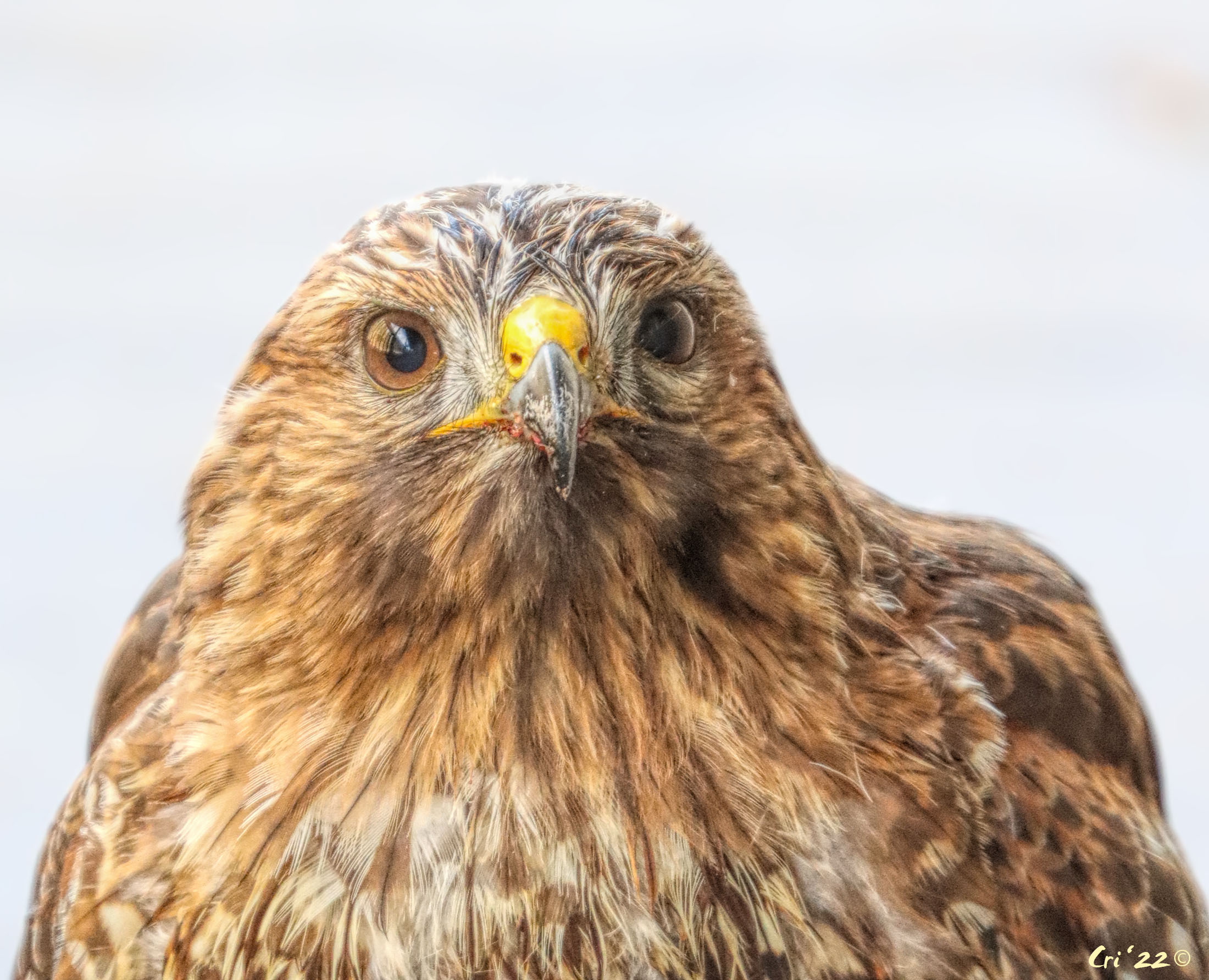
The red-shouldered in our close-up photos did take down a collared dove (it was in December) so sometimes luck is on the side of the hawk.

Don’t think we’ve forgotten “what’s in a name?” There are four subspecies of red-shouldered hawks with quite a bit of “variation on a theme” i.e. some sub species are much paler than others. All red-shouldered have the distinct red shoulder patch though (see photo).

close up photo of a red shouldered hawk, showing from just above the bottom of their wings up.
Red-shouldered Hawk showing us their red shoulder (red feathered “epaulet” on wing facing camera). Photo by Christy Solo

Fun fact: Red-shouldered are found mostly east of the Mississippi and live in every state on “that side” of that border. However, we won the red-shouldered lottery as there is a separate population found only along the California coast up to around Roseburg west of the Cascades. There are sightings of them north of Roseburg and east of the Cascades, but those are few and far between.

Our subspecies is Buteo lineatus elegans. We won’t say our subspecies is the prettiest of all the red-shouldered…but it is right there in the name.

The elegans are smaller than those in the eastern part of the United States but richer in color. Especially their rust-colored chests. Even the namesake red shoulders of our elegans are more vibrant than those of the other subspecies.

Even though the red-shouldered are mostly quiet now as territories have been established, you may still spot one on the wing or perched in a tree. They prefer riparian areas, especially those near shallow wetlands or open meadows. Basically that’s “everywhere around us” here in our awesome, mutual backyard.