By Christy Solo – ONPA 1st Place Award Winner for Best Local Column
This may be our sweetest Crawlies yet!
In this week’s A Botanist’s View we learned a lot about nectar from the flower’s point of view. In this week’s Crawlies we’ll learn about it from critters’ point of view. We’ll also learn that not all nectar is found inside pretty posies.
First let’s dive into “who eats nectar?” Or if we want to be pedantic, “who drinks nectar?”
The answer is – pretty much all creatures great and small! Yes, this includes humans. Many of us have fond memories of plucking periwinkle (Genus Vinca) blossoms and sipping the nectar from their base.
Important: Sip don’t chew; the plant itself is poisonous, so sip with care.
Likewise the nectar from nasturtiums (Genus Tropaeolum) brings the word “ambrosia” to mind.
Some species of bat are also goofy for nectar.
Fun fact: Over 500 species of plants depend on bats for pollination. Many of these have night blooming flowers. Most of these are not North American plants, but if you love your morning banana – thank a nectar loving bat!
Many bird species drink nectar as well. The two most common nectar sippers in our area are hummingbirds and orioles. This is why, if you’re lucky, you’ll get Bullock’s orioles at your hummingbird feeder. You can also buy oriole feeders, which can be spendy, but they’ll happily drink from a $10 hummer feeder if you take the bee guards out.
Of course the largest group of nectar dependent pollinators is arthropods. Thousands of species of bees, flies, beetles, bugs and more types of arthropods rely on nectar.

When you get down to it, flowers are in charge, and we all just exist to meet their needs.
Of course there are some nectar thieves, humans included, who take a flower’s nectar and offer no pollination in return.
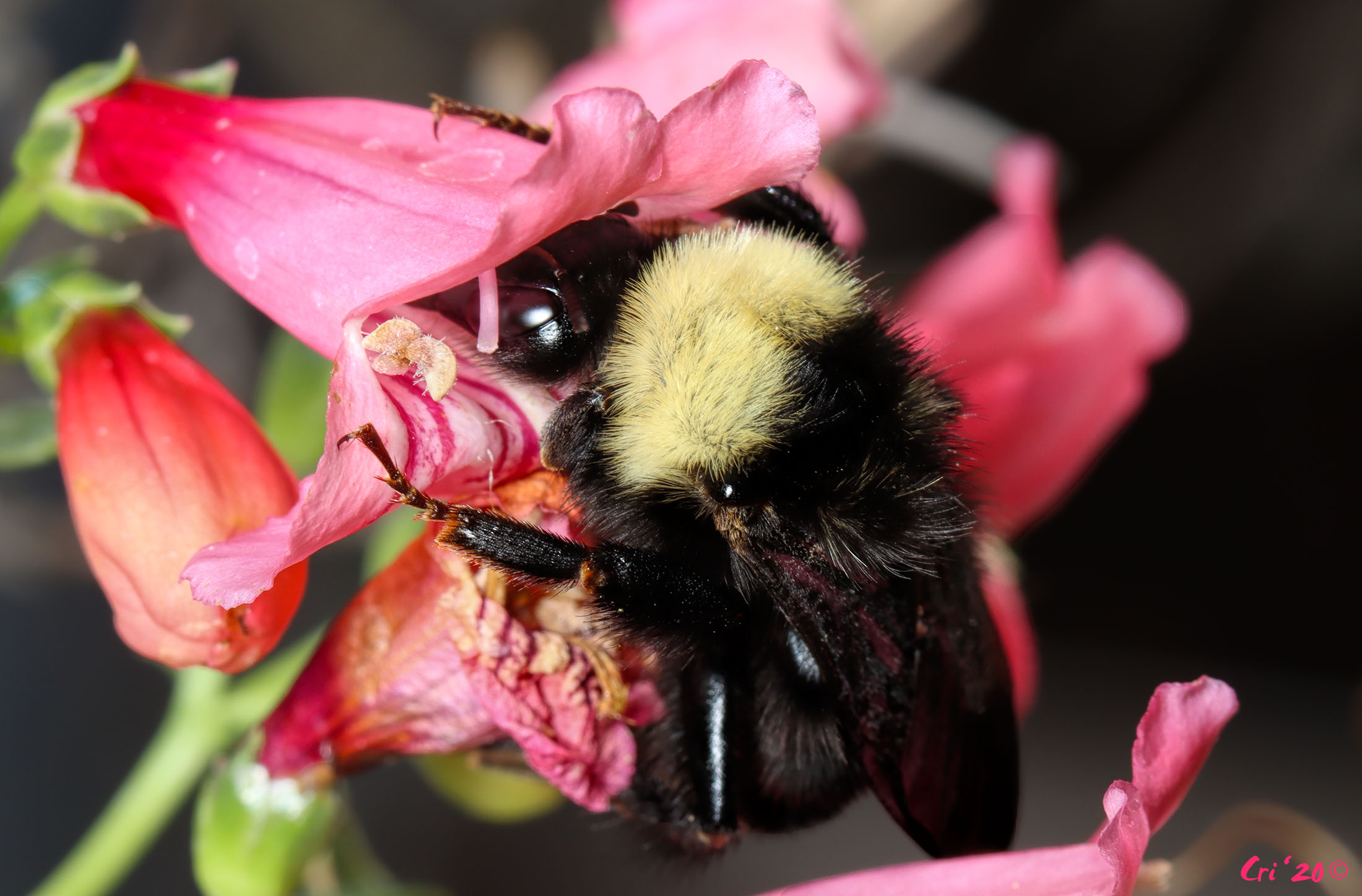
Check out the photo of the male carpenter bee on the pink columbine flower, he is “nectar robbing.” He’s cut into the spur of the columbine and is drinking the nectar for “free” – that is to say he is not paying his pollen tax to the pretty posy.
Carpenter bees are fairly notorious nectar robbers, but to be fair, they are enormous bees and just can’t fit into the “pollen end” of some blooms. Because male carpenter bees don’t need pollen (females gather it for their young), they just go for the easy meal.
Now let’s learn about extrafloral nectaries. They are the little green bumps you see on the stems in our photos. What are they all about? Pollination isn’t the only thing plants need, they also need protection and that’s where extrafloral nectaries come in.
Not all plants have them, but they have been identified in more than 2,000 plant species in more than 64 families. Our pictured nectaries are on a chokecherry, which is in the Prunus Family and when it comes to extrafloral nectaries Prunus rules. All species in that family have them.

How do they help protect the plants? Extrafloral nectaries attract predatory arthropods such as ants, wasps and even lady beetles. The predators get some sweet, easy to access nectar and in return kill harmful soft-bodied arthropods on the plant. Plants never give up their nectar just for the charity of it all.
Of course not all critters who partake of extrafloral nectar are beneficial to the plant, so some – like our pictured deathwatch beetle – do get a free meal.
Not all extrafloral nectaries are green. They can also be red and can be found on the stem of the leaves or even at the bottom edges of the leaves themselves. They also vary in size and shape, some are very small bumps, some rather large and have a well-defined donut shape.
Mmm, donuts! None of us are immune to a sugary treat! To see how you can get some flowery goodness into your diet, check out this week’s Recipe Corner for some tasty treats you don’t need to pay the pollinator tax to enjoy.