
Crawlies with Cri – Shining Flower Beetle

By Christy Solo – ONPA 1st Place Award Winner for Best Local Column

This week we’ll meet a tiny, shiny pollinator. Meet the shining flower beetle (Family Phalacridae).

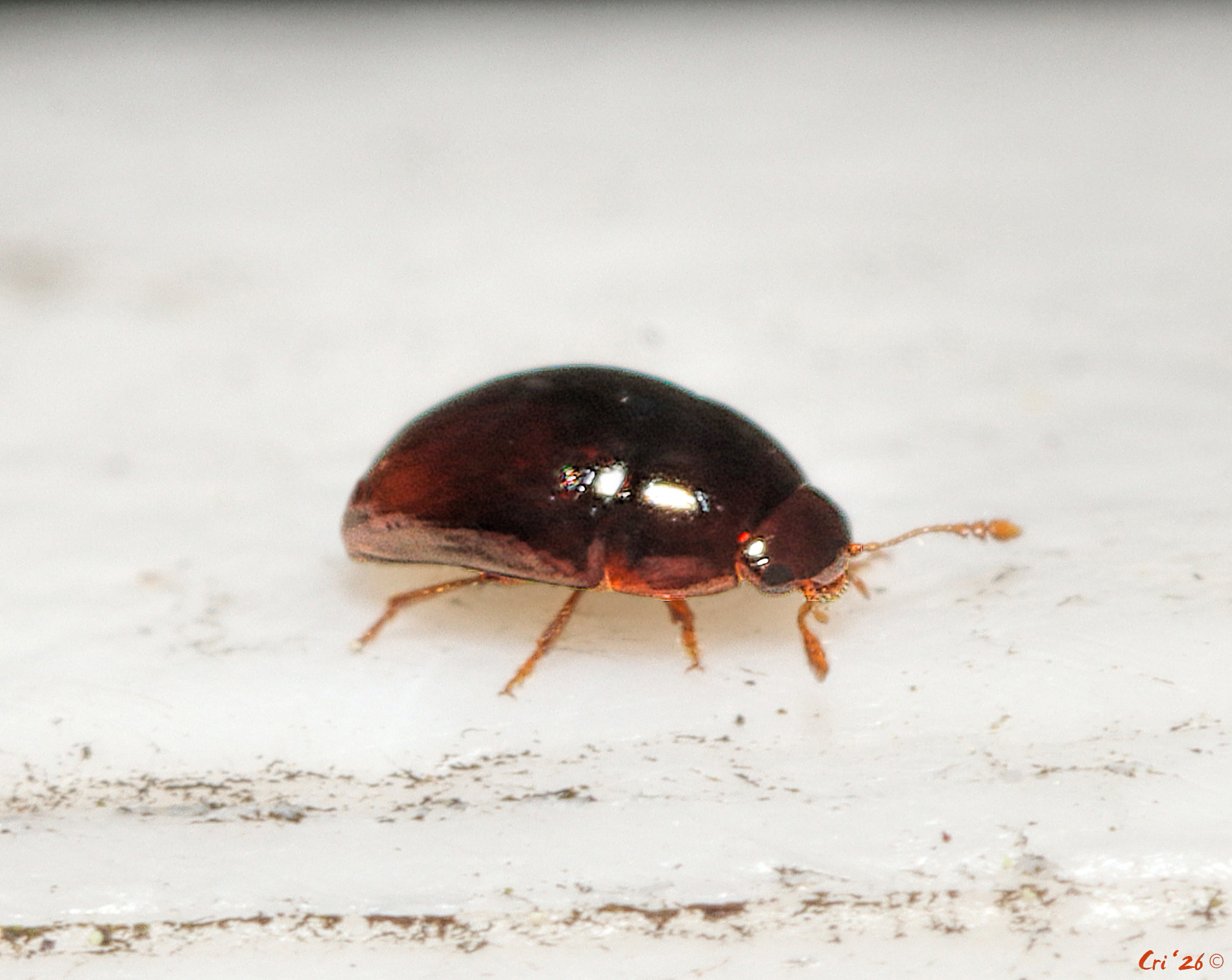
Fun fact: Phalacridae comes from the Greek words for “shining” and “circle.” Great when the name matches the crawly. These beetles are indeed both shiny and circular (well, oval, but we won’t be pedantic).
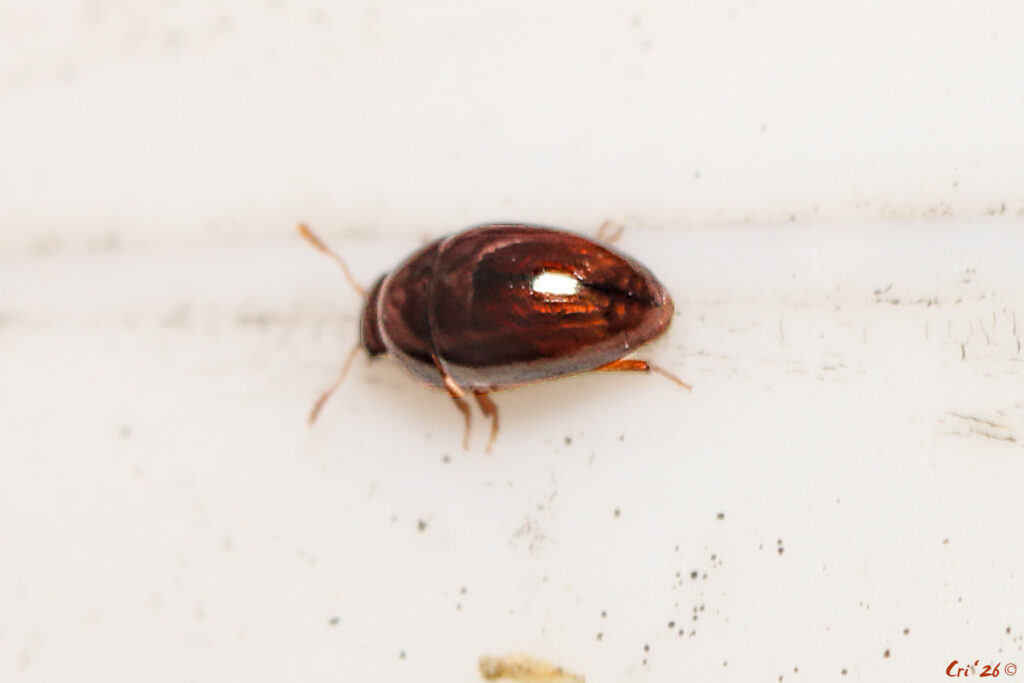
macro photo looking down on the back of a shining flower beetle.
Shining flower beetle (Family Phalacridae) is truly shiny. Photo by Christy Solo

At a mere 1/16” (1.5mm) you might wonder just how much pollen these bright beetles can move around. Most often shiners (as we’ll call them) hang out in large groups on flowers and pollinate by sheer volume. Because they are beetles, they can fly so they can really move pollen from flower to flower despite their teeny-ness.

With a common name that includes “flower” we’re led to believe adult shiners only dine on pollen, but they have a second common name that tells us what other types of foods they enjoy – shining mold beetles. Not as pretty a name, but mold-eating beetles are pretty useful.

There are 122 species of shiners in North America and many of these species are host plant specific. When it comes to flowers, they favor posies in the aster family (Asteraceae). Larval shiners will feed on fluids within the aster flower head; adults munch on the pollen. Larvae can’t do too much damage to too many flowers or adults won’t have pollen to dine on. Nature is all about balance.

So if you see a large group of these bitty, bright beetles on a flower, you might worry they are causing a lot of damage, but they are not.

You’re most likely to see shiners in the Genus Olibrus on flowers. Mold nomming shiners here in Oregon are in the Genus Stilbus.

macro photo of a coppery brown shining flower beetle.
Shining flower beetle (Family Phalacridae) shines from every angle. Photo by Christy Solo

There are 12 genera of shiners in North America, but we have representatives from just those two here in Oregon. More southern areas of the US have more shining flower beetle diversity and more genera are represented.

Shiners who feast on mold are more likely to be found on grasses and grains than on flowers because they dine on spores of ergot, smut and rust. Those may sound like the partners in the weirdest law firm ever (or possibly the best band name ever), but they are all fungi which live on plants. Ergot – which grows on rye – can be very dangerous to mammals if consumed, but shiners love them!

Not only do mold shiners eliminate some fungi and molds, but they can draw attention to crops or other grains, grasses or plants with ergot, smut and rust infestations by being shiny beacons of “fungi found here!” It’s crucial these fungal infestations are found. For example, rusts are among the most harmful pathogens to agriculture, horticulture and forestry.

That said, finding Stilbus shiners does not mean there is nasty ergot, smut or rust around. They also eat other types of fungi such as mushrooms.

And that said, sadly we have very few shining flower beetles here in Oregon – despite our vast amounts of both fungi and asters.

There are 4,705 recorded sightings of shiners on iNaturalist, and a mere 41 of those are here in Oregon. Luckily for us we have many other pollinators to keep our asters blooming.

If you’d like to see a shiner in real life, now is as good a time as any. They are on the wing here from April – June. Of course you might see one later in the year as well, but they only have one generation of young per season.

Adults are already out and about because some young will overwinter snug beneath the soil in their pupal form and hatch out as soon as the weather warms enough. Then they will search for flowers or fungi and start working on this year’s new generation.