Commentary by Christy Solo
This week finds us on part ?? of The Continuing Saga of Cri Takes Back Her Yard from the Himalayan Blackberry.
If you want to catch up, you can read the first two Rogues on the subject here and here.
If you don’t want to go read the previous columns – Brief History: Due to reasons, my yard has been taken over by invasive Himalayan Blackberry – of weapons grade size. I’ve been literally hacking away at it since March – when time allows.
I took a brief pause to plant some new shrubs to replace one very large shrub the blackberry had killed.
Cri vs. Blackberry is like my side hustle now.
I admit I’m not nearly as far along as I’d hoped to be as summer approaches. Also, blackberry being blackberry, the stuff keeps growing even as I hack away. It’s all got a very Sisyphean vibe.
So once again, I’ve adjusted my goals and my game plan. I’ll keep hacking away but may have to resign myself to the fact that I won’t finish the job until fall. First, because it’s still spring, I need to replant uncovered areas stat. Second, I have less than zero desire or motivation to blackberry hack once temps hit the 90s.
Oh, and third – I’ve simply hacked n stacked too much, and I’ve run out of places to stack the cut canes – so in between replanting, I need to chip up the weapons grade canes into manageable bits so I can bag them up for the trash.
So, I’ve re-written my mental list of Cri vs. Blackberry tasks.
First I opted to reseed the swath of lawn killed by the blackberry. However, I opted not to go with “lawn” because I read my own articles. The Feb. 18 All Things was all about Oregon’s Clover Industry and included information on the benefits of a clover lawn vs. a grass lawn.
So heeding my own advice, while also supporting Oregon’s clover industry and Grange Co-op I figured I’d see if I could fill in the dead areas of lawn with red clover.
I’m not saying it’s particularly difficult to replace lawn with clover, I am saying that I personally don’t have a very green thumb. This is sad, really because I am of a Green Thumb People. Parents, grandparents, various aunts and uncles all had thumbs of vibrant green and could practically grow a flourishing garden in a desert. Somehow, that verdant gene skipped right over me.
Nonetheless, I headed to the seed section of Grange Co-op and bought two bags of Medium Red Clover. “Non-GMO” and “Packed and supplied by a local Oregon Company” red clover to boot. To be clear, two 2 lb. bags is far more seed than I would need, but I erred to caution in case my first planting died or all the seeds were eaten by birds. Either one was a viable option.

Doubling down on caution, I only seeded half the bare space to start with. I figured I could learn from any mistakes when I seeded the other half (I didn’t, really).
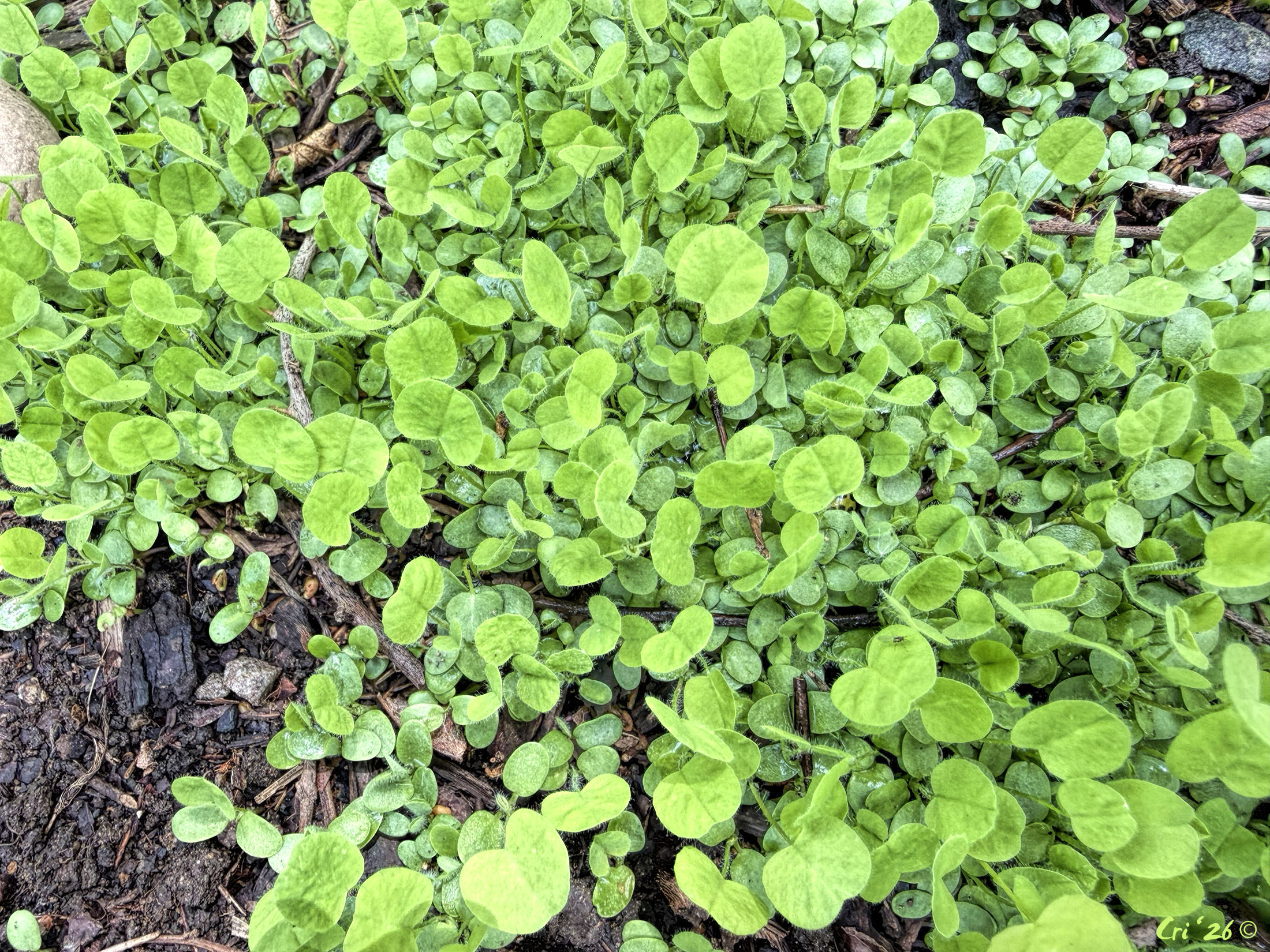
To be honest, I’ve forgotten exactly when I planted the clover – we’ll go with “three or four weeks ago” and as you can see, even my lack of green thumbness did not prevent the clover from growing.
My lack of skill at spreading seed evenly (how do you even do that by hand?) did cause the clover to come up in clumps, but it’s growing and that was my goal.
“Planting” the seeds was ridiculously easy too. I used just the two pictured rakes, one to soften up the areas of “lawn” that were too compacted (AKA hard as brick) the second to gently spread some soil and mulch over the seeds for some protection from birds and to help hold moisture in.
I did water the area daily for just 10 or 15 minutes even though it isn’t technically “set your sprinklers on a timer” season yet because both the clover seeds and my newly planted shrubs needed a water boost.
The upshot is – I can now firmly stand behind the “replace your lawn with clover” recommendation from Oregon’s clover farmers. It really is super easy and will look lovely when in bloom and make the local pollinators very happy.
Clover does need to be re-seeded periodically, but you can buy enough seed for 4000 sq. ft. for a mere $11 so it’s not a bank-breaking bit of maintenance.