A Botanist’s View of Local Flora – Big Deer Vetch

by Dr. F. Alice LeDuc

Big Deervetch – Hosackia crassifolia, because of a name change the old name is considered a synonom Lotus crassifolius

Deervetch is native to southwestern Washington, western Oregon south through California to Baja California. It is found in open areas of chaparral, pine woodlands, roadside verges and other disturbed areas. It is an excellent plant for reestablishment of burned and logged areas. The roots are spreading from rhizomes that recover quickly after soil is disturbed.

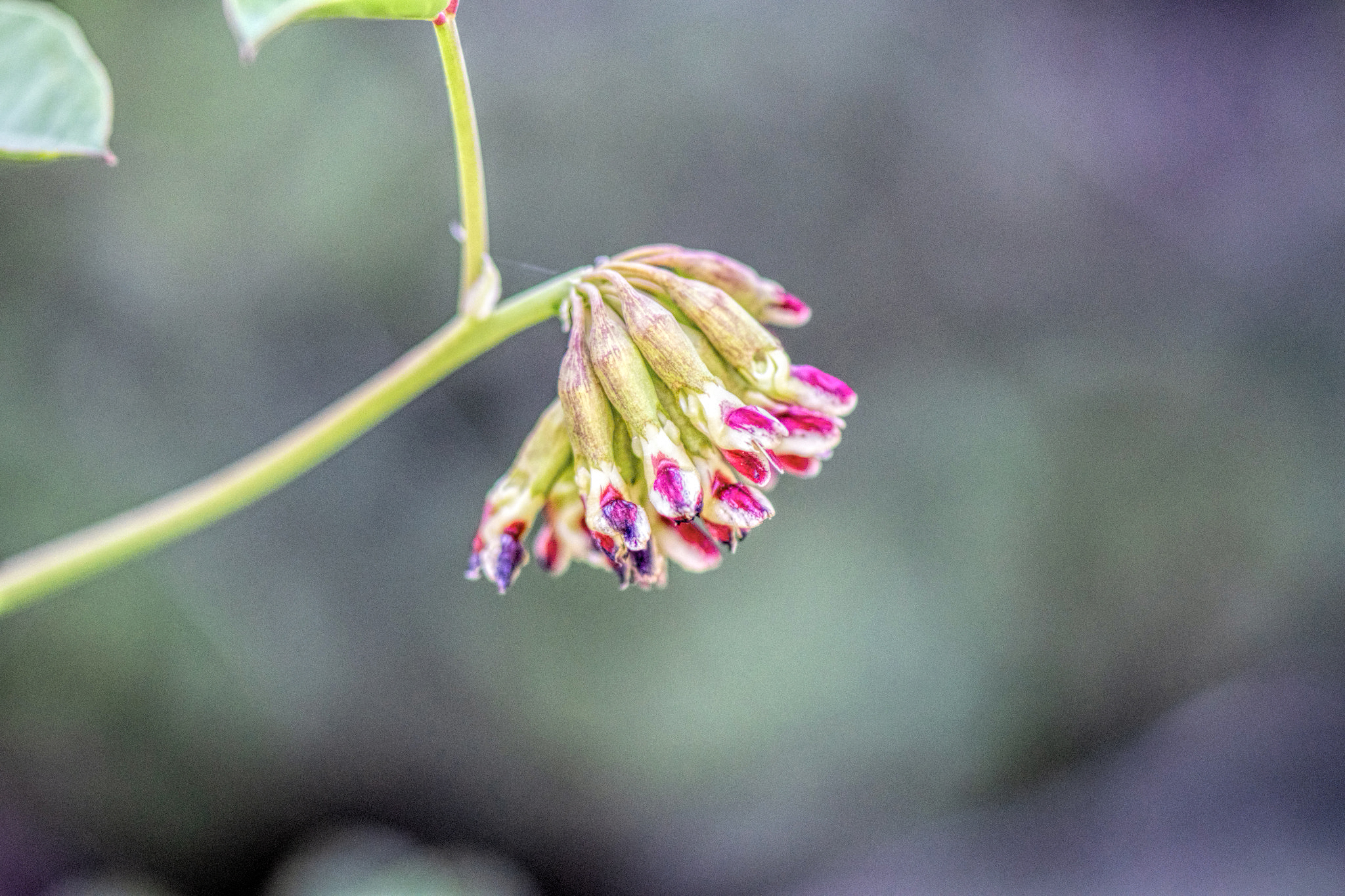
The plant is an herbaceous perennial legume (bean family). It is a rapid grower, sprawling to erect, attaining heights of one to five feet with the stems hollow at the base. The leaves are compounded with seven to twenty leaflets that are about an inch long, elliptic to egg shaped, that are up to two and a half times longer than wide. The flowers are borne in umbels of seven to twenty tiny flowers that are pea-shaped (papilionaceous), yellow-green turning red-purple with age. Fruits look like pea pods that are one and one-half to almost three inches long and one to two tenths of an inch wide.  The plants bloom from May to August with fruits occurring from June till September.

The Deervetch has a number of uses. In nature they provide food for pollinators such as bees, butterflies and hummingbirds. In addition, they are the host plant for several species of butterflies, such as the silver-spotted skipper. The foliage and fruits are forage for deer, elk, quail and other birds as well as a number of small mammals.  Many reforestation, soil reclamation and agricultural needs are provided by this plant species. The rapid growth and regrowth provides quick cover which prevents soil and bank erosion.

three up collage of blooming big deer vetch flowers and leaves.
Big Deer Vetch has beautiful rich colored blooms when you get a nice close look. Top Photos by sheriff_woody_pct on iNaturalist, Bottom Photo by Justin Paulin on iNaturalist

So, how would one go about establishing deervetch? This can be done by seeding or using root pieces. Let’s look at establishment with seeds. The seeds have what is called double dormancy. This means that they have mechanical and physiological properties that must be overcome. The mechanical is solved by rubbing the seeds with an abrasive that will remove some of the seed coat and allowing water to enter the seed. This can also be achieved in some species of legumes by pouring boiling water over the seeds and letting them sit in the water for thirty minutes or even overnight. The later way has not really been researched for Deervetch. So, after you have mechanically scared the seeds, you must then place them in moist soil and refrigerate them for thirty to ninety days. Now you are ready to plant. Now if you are considering a fall planting then skip the step in the refrigerator and sow directly in the soil. The cold winter will allow for the physiological dormancy to be overcome naturally. If you wish to plant in the spring once the soil has warmed up then you need to refrigerate the seed through the winter in the refrigerator. The plants are very slow to develop so weed management is extremely important. Weeds must be kept to a minimum. Once established the plants are quit drought tolerant and can resprout from the roots or rhizomes.

For additional information talk to your County Extension Agent.