by Dr. F. Alice LeDuc
Urtica dioica – Stinging Nettle; Dead Nettle – Lamium purpureum
What is in a common name? Last week I talked about Hedge Nettles that have square stems and two lipped flowers. This week we will look at two other Nettles. First of all, I wondered about the word used in all plants, Nettle. What is the derivation? One needs to understand that the Stinging nettle was originally found in the Europe, temperate Asia and North Africa, now around the world. No doubt carried by humas because of medicinal properties. The derivation path: In Proto-Indo-European net meant to bind or tie; in Proto-Germanic nato- then in Olde English netele referred to stinging plant who’s stem fibers were used to make cordage; Middle English it became netle then nettle. Still referring to the stinging plant we know as Urtica dioica or Stinging Nettle. Nettle as a common name, first applied to the plants with stinging, slightly poisonous hairs that caused a rash, i.e. Urtica species. Then it became used for plants that had leaves that looked like Stinging Nettle’s.
Today the Stinging Nettle can be found around the world in moist soils, often near human habitations ancient or modern. It is found abundantly in the Pacific Northwest where plentiful rainfall creates ideal growing conditions. The plant is easily identified if you come in contact with the plant. The numerous hairs on the plant are of two types the soft short hairs and the long needle-like hairs that break of when touched and work like a hypodermic needle that injects the irritant chemical into the skin. Botanically the plant we know as Stinging Nettle has been classified as a subspecies of Urtica dioica but more resent taxonomic treatments have given the North American species full species statis as U. gracilis.
The juice from the leaves and especially stems of Curly Leaf Dock (Rumex crispus) can be used to counteract the stinging nettle’s sting. In the PNW, dock can often be found growing near stinging nettles.
The stinging nettle plant is perennial, growing and spreading by rhizomes often forming large colonies. The stems die down in winter, regrowing each spring. The leaves are opposite, lanceolate to heart-shaped, two to six inches long and coarsely toothed, with numerous hairs. The inflorescences are in catkin-like clusters in the axils of the leaves. The species is dioecious, meaning the plants have either only male or only female flowers. The green flowers are tiny and consist mainly of either pistolate or staminate reproductive parts.

The plant is host to several butterflies and moth larvae, including the Comma butterfly. It is not eaten by mammals, probably because of the stinging hairs. Historically the stems have been used for cordage. Early Pacific Northwest explorers called it Vancouver Island Hemp. The Indigenous people cooked the early spring leaves to supplement their diet. Cooking the leaves removes the stinging chemicals. The cooked leaves taste much like spinach. Evidently there was a competition in England to see how many raw leaves a person could eat in a specific time. Thank you but no thank you.
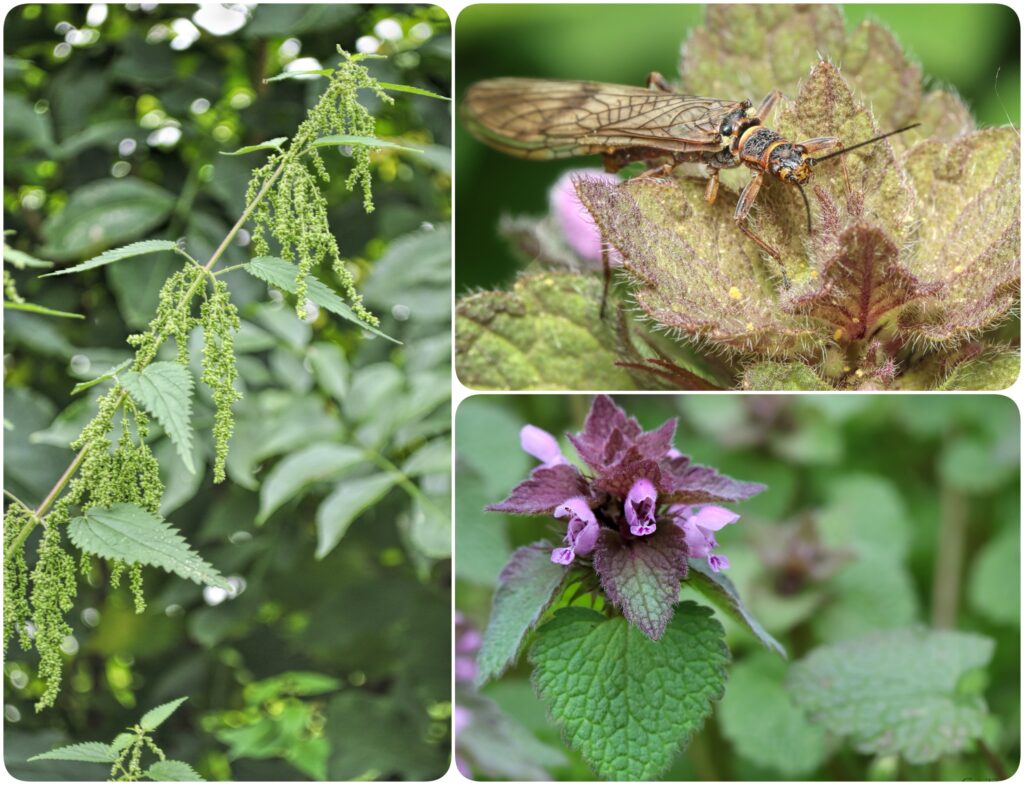
So, now looking at Dead Nettle, Lamium purpureum. Why did it get the name Dead Nettle? Evidently an ointment made by heating with butter and rubbed on itchy or painful rashes alleviates the pain. Thus, the removal of pain i.e. death of nettle (stinging properties).
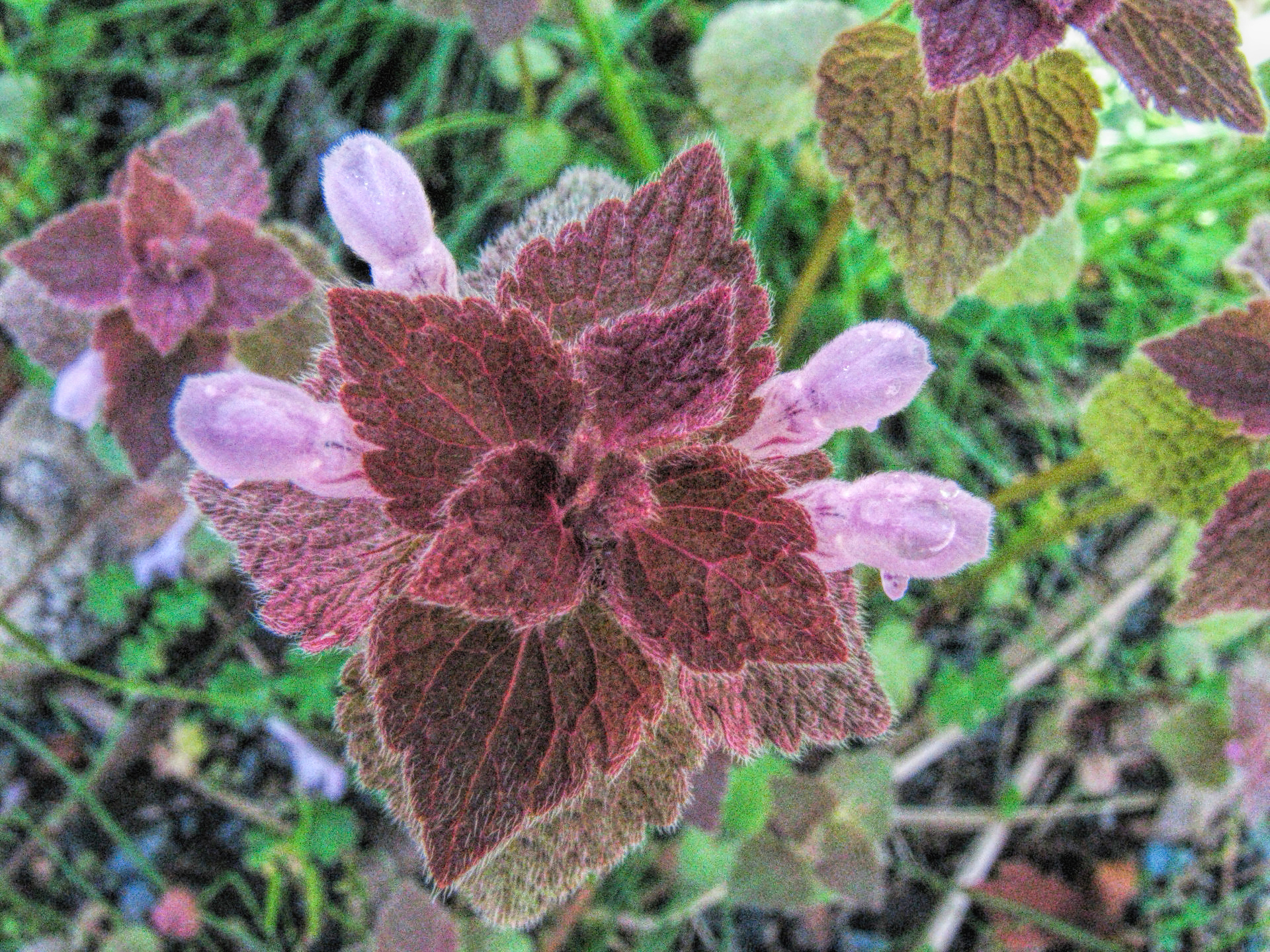
Dead Nettle is not native but has become a wide spread “weed”. It is an attractive flowering annual with leaves, though much smaller, looking like stinging nettle leaves. It has spreading or erect square stems and leaves opposite, short petioles, round to egg-shaped with a heat-shaped base and toothed margins with hairs though not the stinging type. The two lipped flowers have a hood shaped upper lip with the lower lip three lobed, pink to purple in color and often with spots. In early spring the newest leaves have a purple color.
The plant is not native to North America but has become ubiquitous throughout thanks to the early colonists. It is found along roadsides, in meadows, other disturbed places and in gardens. The tender edible tops and leaves in spring can be added to salads or stir-fried as a vegetable. The Dead Nettle is also an important spring pollinator plant.
So, a nettle by any other name may not be untouchable or stinging.