All Things Oregon – Xeriscaping in Southern Oregon

by Christy Solo – Editor

Looking at the 10-day weather forecast (sun, sun, sun and more sun) this seems like a good week to explore Xeriscaping in Southern Oregon.

What is xeriscaping? Hint – it’s also known as low water use landscaping, water-conserving landscaping, drought-tolerant landscaping and smart scaping.

We think “xeriscaping” is more fun to say than any of the much easier to spell options, so we’ll stick with that.

The term xeriscaping was coined in Denver 1981 and is a combination of “landscaping” with the Greek “xero” which means “dry.”

The act of xeriscaping creates green spaces which are low maintenance and require very little water.

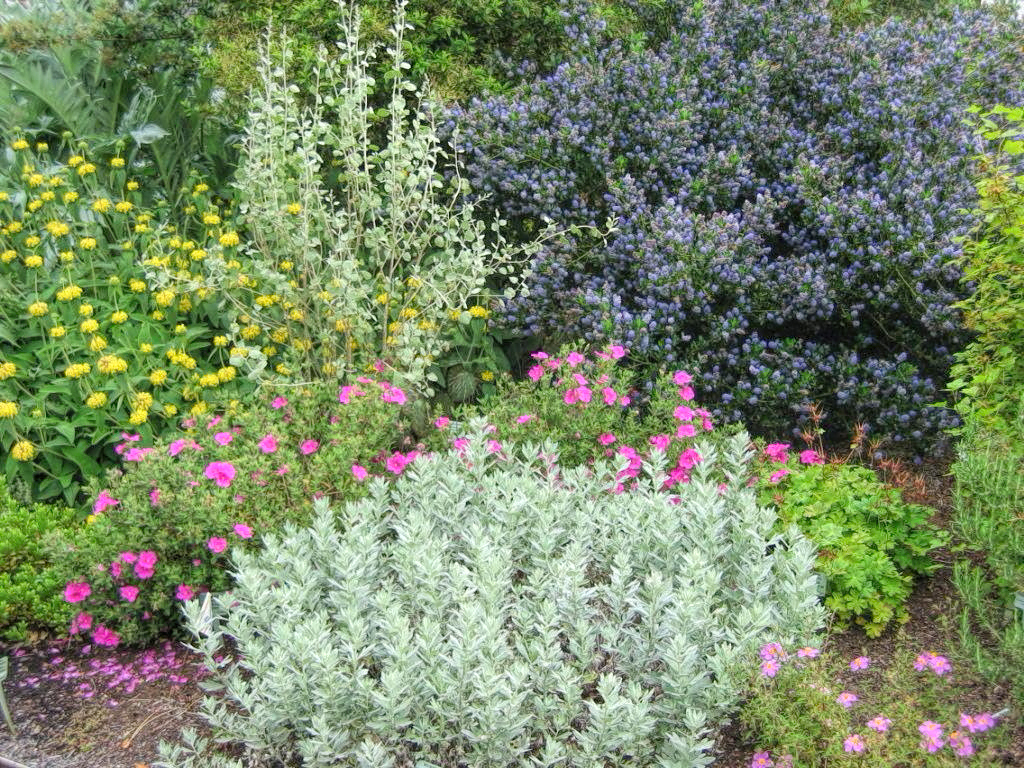
Some folks have a mental picture of xeriscaping that is “rocks and cacti” but this week we’ll learn that is miles from the truth.

photo of a lush bog area in a xeriscape garden.
Bog areas in xeriscape gardens are quite lush.

Here in our area, you can create gorgeous gardens and not run your sprinklers for hours on end. Moreover, xeriscaping allows folks who depend on well water to have a pretty yard and they won’t have to choose between keeping their plants alive and having enough water to flush their toilets come late summer/early fall.

Fun(?) fact: it’s estimated that up to 30% of annual household water use is used for irrigating landscapes. Xeriscaping is a money saver! Whether you pay for your water and electricity (city or private water system) or “just” the electricity to run your well or irrigation pump.

If you have concerns that xeriscaping may limit your plant options – worry not! There are so many xeriscape plant options for our area, it will make your head spin. Here’s just one list from Douglas County. We put in a link because we can’t possibly include the entire list in this article.

Of course it’s best to start your low-water plant search by looking at native plants, then you can expand into non-native-but-recommended plants to fill in specific areas of your yard. Maybe you have a little niche that holds water in summer or is super-extra dry in summer. Or a spot where you’d like flowers of a certain color, or ones which will bloom during certain months. Looking at non-natives will help fill in particular gaps.

three up collage of of a xeriscape garden in different seasons.
Xeriscape gardens look lovely in all seasons. Pictured are spring, summer and fall.

Fun fact: Another huge bonus to xeriscaping is that many drought-tolerant plants thrive in full sun. Normally those full sun areas are a gardener’s bane when the relentless sun and heat of July and August hit. Plants just seem to wilt and/or turn brown overnight. What a relief it would be to have pretty plants which thrive in those hot spots.

So to kick off your “turn my yard to xeriscape” quest, start off with a couple/few problem areas. Those “everything burns” sunny spots are one good area to convert first.

Another type of “I just can’t water it enough” yard terrain is the dreaded sloped spot. Water just runs right down, never soaking in. Cover that slope in drought-tolerant plants this fall and you’ll be happy you did come spring.

Why fall? That’s the best time to plant your xeriscape plants, just after fall rains begin. That way they can become established during the cool, rainy season and won’t need supplemental irrigation come their first summer.

You can plant in spring, of course, but even drought-tolerant plants need some extra water if their first growing season is under summer sun.

A well-balanced xeriscape garden is planted with both herbaceous and evergreen perennials, shrubs and trees for year-round interest. That way, there’s always something blooming.

If you want to make your xeriscape area low-maintenance as well as low/no water, consider these bonus points when picking out plants:

  • Mature size: fitting in the space without regular pruning or hedging as a mature plant.
  • Naturally clean physical appearance: looks good without regular deadheading or pruning.
  • Disease resistance.

As you work on creating and expanding your xeriscape yard, don’t get discouraged if some plants aren’t happy come summer. As with establishing any type of garden there will be hit and miss plants. Maybe a plant that does great in full sun *most* places will find your full sun a bit too sunny. That plant can be relocated and replaced.

It’s tempting to look at some of the photos of amazing, established xeriscape gardens and opt to recreate “exactly that” but every garden space is different so plan your dream xeriscape, but be ready to make some substitutions.

Beyond using drought tolerant plants, mulch, mulch mulch! Mulch is so wonderful, it covers the ground which keeps the water in the soil from evaporating, i.e. water retention, and protects plant roots from the hot baking sun. It also keeps the weeds down!

Secondly if you use organic mulches like bark, wood chips, shredded leaves, even just raking leaves into landscape beds, as they decompose they add nutrients back into the soil.

There are scads of resources to help you get started. In addition to the plant list we’ve linked to, Medford has a “smart garden” site that will inspire and guide you. That site has a plant list of its own.

Of course, Oregon State University has lots of resources on their extension website as well. And we can’t forget that staff at our local nurseries and garden stores are quite savvy and there to help you make your xeriscape garden grow.

For some in-person inspiration, you can visit the xeriscape section at the Discovery Garden in Roseburg located at 101 River Fork Parks Rd., Roseburg OR. Make a day of it in July or August; that way you can take photos and notes and be ready to stock up and plant at least one section of xeriscape in your yard this fall.