Spring Migration – safely help pond turtles

by Christy Solo – Editor

Despite recent rains and chilly nights, it’s still migration time here in our area. That means it’s time to revisit “How to move a Western pond turtle safely and only when absolutely necessary.”

Western pond turtles only live in Oregon and California (with a small population in Nevada).

Currently they are a Species of Concern and an Oregon Conservation Strategy species.

In 2023 the US Department of Fish & Wildlife recommended our Oregon pond turtles be put on the Endangered Species list. Currently the USFW webpage on that recommendation is archived and is not being updated due to DEI rollbacks.

Government webpages were frozen and archived based on keyword searches related to DEI and the Western Pond turtle page has a sentence reading in part, “…both species have increasing risk of extinction due to population losses, decreased genetic diversity…” and the word “diversity” flipped the “Archive this for DEI” flag.

So the fate of our backyard buddies is temporarily on hold on a federal level, but we can still do what Oregonians do and take care of our own, and here’s one simple way we can help.

Why did the pond turtle cross the road?

With spring in the air, keep an eye out for pond turtles on roadways. Turtles hit land this time of year for four key reasons:

  1. Seasonal movements between different wetland habitats.
  2. Heading back to the water after overwintering on dry land.
  3. Early summer nesting migration of egg laden females.
  4. Newly hatched juveniles looking for backwaters and ponds to be their permanent homes.

Turtles breed through mid-July so they may be in roadways for most of the spring & summer.

Here in our area the western pond turtle is the reptile most likely to mosey across the pavement. As an Oregon Department of Fish and Wildlife conservation strategy species, pond turtles may need your help to safely reach their destination.

Pond turtle populations are on the decline due in part to loss of habitat and nonnative species invading their territory.

What should you do if you see a turtle in the road?

photo looking down on a pond turtle who is pulled into their shell.
Western Pond Turtle on the side of Hwy. 227 after I had moved them from the middle of the highway. Photo by Christy Solo
  • Don’t put yourself or others in danger. Make sure you can safely pull over to assist.
  • Allow Unassisted Road Crossings. When turtles can safely cross without interference (i.e., there is no oncoming traffic) let them do it on their own.
  • Watch from a distance and move as little as possible. Movement will often cause turtles to change direction, stop or hide in their shells.
  • If there is imminent danger, do pick up the turtle. Handle turtles gently and avoid excessive handling.

If it’s necessary to pick a turtle up, it should be grasped gently along the shell edge near the midpoint of the body.

Note: many turtles empty their bladder when lifted off the ground, so be careful not to drop them if they should suddenly expel water.

  • Maintain Direction of Travel. Always move turtles in the same direction they were traveling in when encountered. Turtles should always be moved across roadways in as direct a line as possible. Set them down just far enough from the road to ensure they are safe, don’t carry them any further than necessary!
  • Wash your hands or use a disinfecting wipe or hand sanitizer ASAP. Turtles and other reptiles naturally carry salmonella bacteria, so wash up as soon as you can after handling.

If you find an injured turtle, do not pick it up unless danger is imminent. First, contact ODFW, Oregon State Police (OSP) or a licensed wildlife rehabilitator (like Wildlife Images) for advice and instruction.

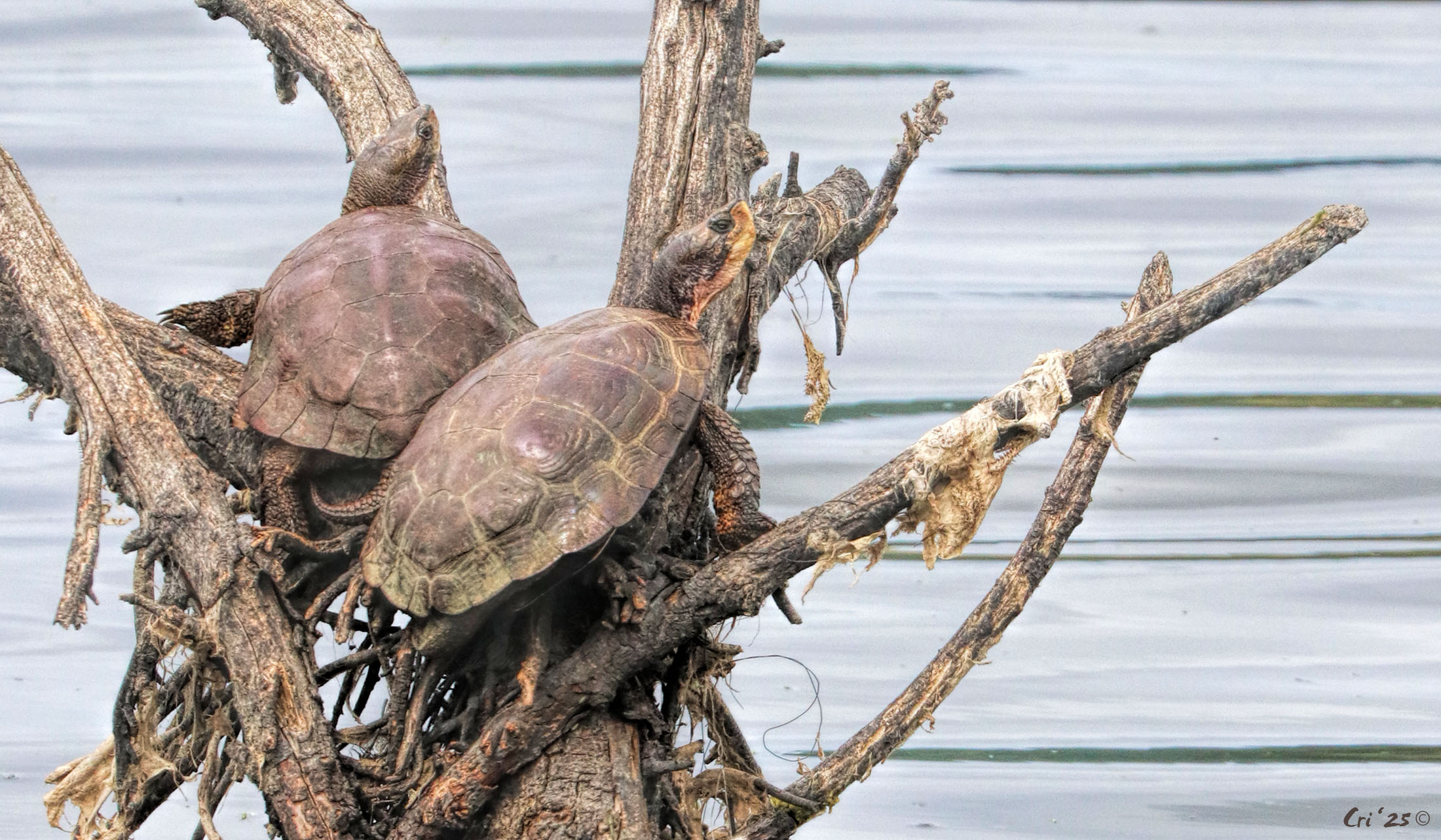
Fun Facts: Pond Turtles actually live in a variety of habitats: ponds, rivers, reservoirs, streams, seasonal wetlands. They can grow up to 10 inches in length and can live up to 20 years. They are not fully aquatic and may spend part of the year in upland forests. Their diet consists mostly of insects, and they love to bask in the sun.

photo of a pond turtle on a half submerged log.
Western Pond Turtle at Denman Wildlife Area. Photo by Christy Solo

Locally we have two places you have a great chance of seeing a Western pond turtle! They love to hang out near the Takelma Boat Ramp in the little pond-like area behind the footbridge.

They also love Denman Wildlife Area, and you have a great chance of spotting one out sunning even on our partially cloudy late spring days.