by Dr. F. Alice LeDuc
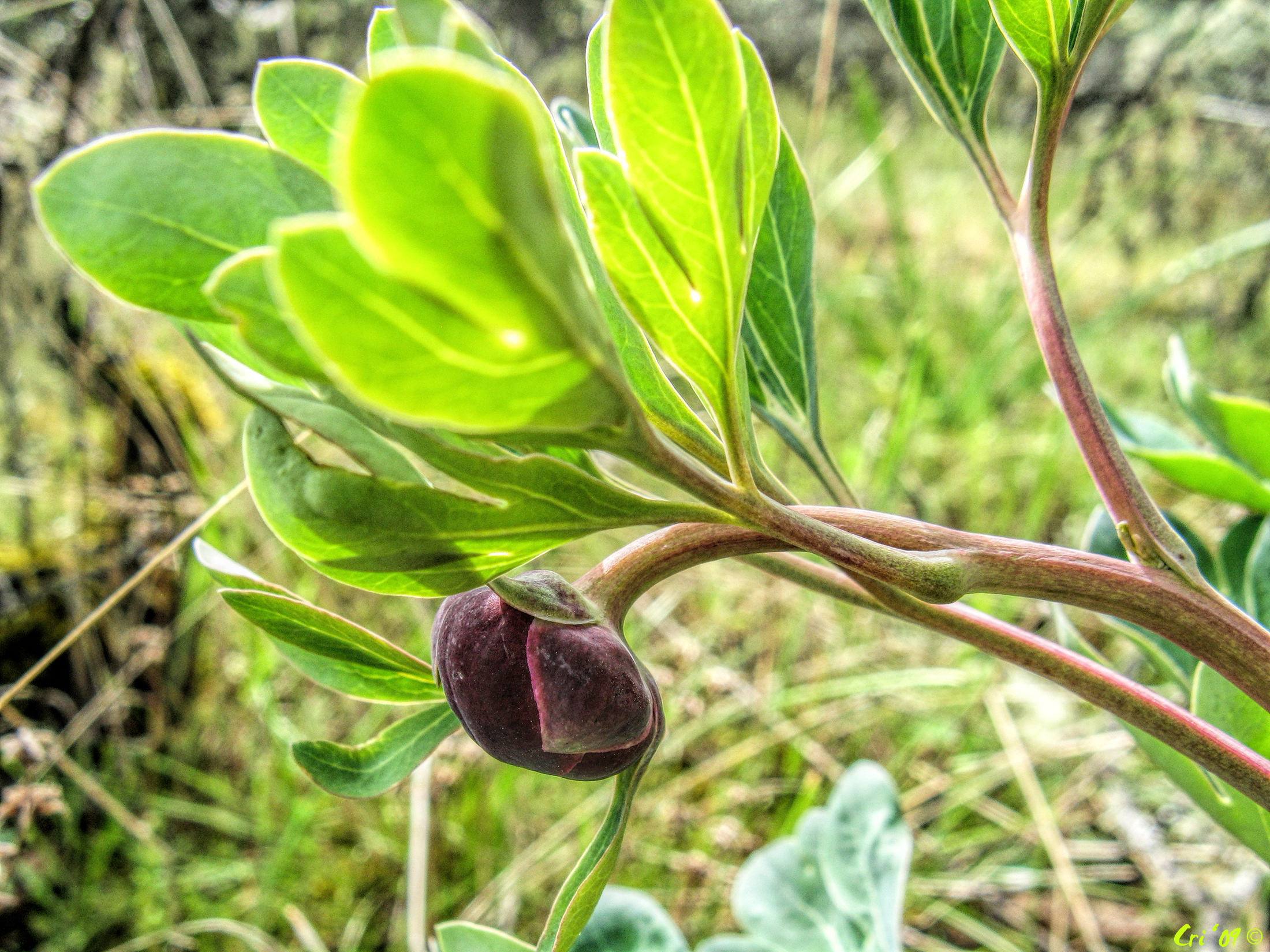
Paeonia brownii – Western Peony
This is the time of year when the Peonies are blooming that I think of my sisters. Two of them dearly loved these majestic flowers. My sister in California had a beautiful bed of pale pink herbaceous peonies mingled with Bearded Iris of the same color. Blooming together they made a fabulous show. My other sister also loved the peonies especially when she and her husband retired and moved to Trail, Oregon. The home they purchased had a raised bed of Tree Peonies across much of the front of the home. In addition, in a bed under the silver birch trees were clumps of herbaceous peonies in pink and white colors.
This May as we look to celebrating Mother’s Day my niece and I would like to pay tribute to my sisters and her mother. Our tribute is in the form of a celebration of peonies. Another great surprise my sister found was when she joined the Shady Cove-Trail Wildflower Society. When they were collecting plants for the annual Wildflower Show, which used to be the first weekend in May and benefited Fire District 4, she discovered that there was a rather rare species of peony native to southern Oregon. Paeonia brownii to be exact. She cherished her knowledge of where the plant grew, a location she carefully guarded till her death.
There is a second species of peony found in California, Paeonia californica. All the remaining species of this genus are found in the Eastern Hemisphere several species in southern Europe, around the Mediterranean Sea, and across east Asia and into China, Korea and Japan. There are still many questions about the classification of the various species in the genus. Botanists have differences in whether it is as many as twenty-two or as many as forty species. A great deal of research still needs to be done.
Our native species can be found in dry slopes and meadows on both sides of the Cascades. The leaves are five to eight per stem and divided two to three times, leaflets oval with rounded tips. The flowers are red to brownish with round petals that are edged with yellow. The flowers, alas, are much smaller than the garden counterparts.

There are two major groups of species the first is the herbaceous ones that die back to the ground every fall, surviving as an underground crown of buds that emerge again each spring. Among these are the common garden peonies that can be found in many northern and central North America yards. Beautiful flowers in colors from white to pink to magenta red and even some corals. The other main group of species is the Tree Peonies, that are in reality not trees but shrubs with wood stems that live year after year, unlike the really familiar herbaceous peonies.

Remember that the Tree Peonies are shrubs and never prune them to the ground. These peonies are slow growing but the rewards are worth it. The flowers are considerably larger than the herbaceous peonies. All peonies have highly dissected leaves and flowers with a number of petals that hold a ring of stamens within which are one to fifteen carpels each carpel when pollinated produces a follicle which holds several large seeds.
While peony flowers are beautiful it was the medicinal properties of the peony roots that were of importance historically. The roots contain many different chemical compounds that have shown medical properties such as antioxidants, antitumor, antipathogenic, cardiovascular-system-protective activities and central-nervous-system activities. Historically the roots were used for treating aliments such as asthma, migraines, epilepsy, liver problems and menstrual issues. The flowers were called Queen of Flowers by some cultures and King of Flowers in other cultures.
Whichever cultivar of our garden peonies you choose they are easy to grow especially the herbaceous ones, you will truly enjoy having them in your garden. Just remember the native species is not very common, today, so please leave them be.