by Dr. F. Alice LeDuc
Pacific Ninebark – Physocarpus capitatus
I was first introduced to Ninebark in college when I was taking and teaching woody plant identification classes. In the eastern U.S. Eastern Ninebark (Physocarpus oplifolius) was a common large deciduous shrub with showy flowers in late spring, beautiful fall color in yellows, oranges and reds. In the winter the bare stems and branches had peeling layers of bark. From a landscape design perspective this is an idea plant with interest in all four seasons: spring, summer, fall and winter. In all the years I had visited Oregon this was not one of the plants that caught my eye. Probably because most of my visits were in summer. So, I was pleasantly surprised as an adult to find the Pacific Ninebark so common throughout much of the region I had grown to love. I think I first saw it in its native habitat in McGregor Park with my sister who volunteered at the visitor center there for a number of years.
The range of the Ninebark is from southern Alaska, British Columbia, south through Washington and Idaho, Oregon to northern California. It prefers even moisture through out the year. It’s normally found along stream banks, moist shady north facing slopes and forest edges.
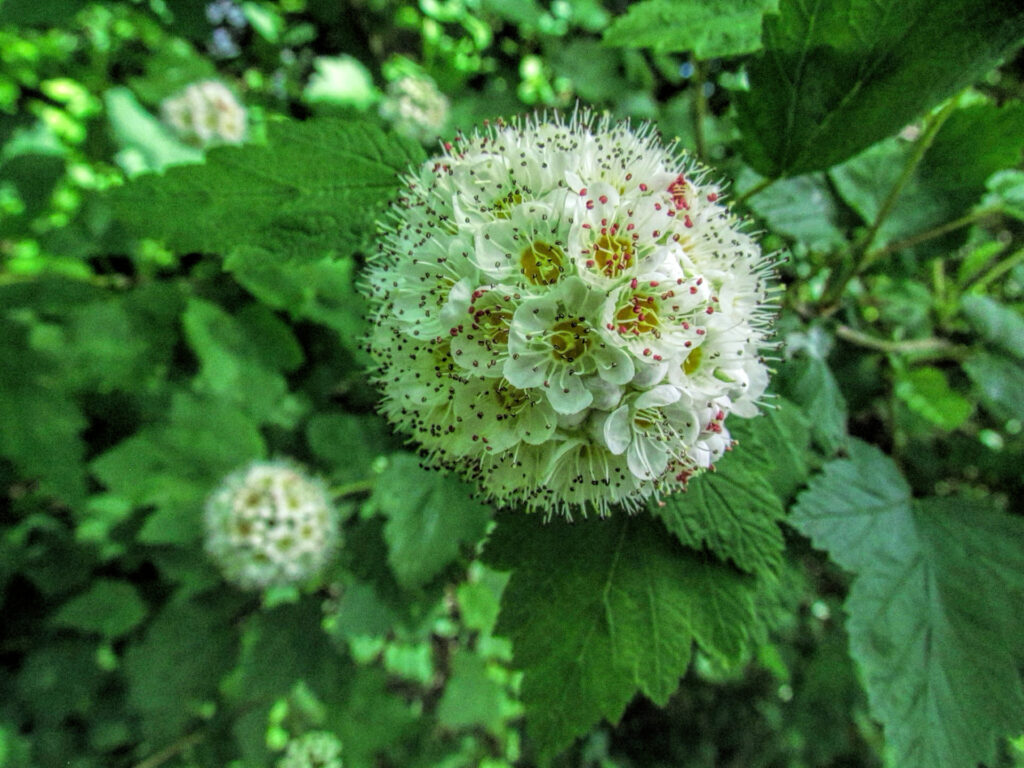
Ninebark is a deciduous woody shrub to about twelve feet, with numerous stems arising from the ground. The ascending suppl stems eventually arch over creating a large oval shaped shrub. Within the frame are many short branches that combine to create a very dense plant. The leaves are alternately arranged medium green above lighter below. They are palmately veined with three to five shallow lobes that have toothed margins. The small flowers in late spring, usually June, are arranged in tight round inflorescences. Each flower is white, has five petals and numerous stamens. The fruits are puffy seed pods.
Because the Ninebark has an extensive strong fibrous root system the plant is invaluable in ecosystem restoration. They grow in numerous degrees of sun and shade, withstand wet to moderately dry soils while holding soil from erosion. In addition, the dense structure provides habitat for various birds and small mammals. Providing cover, nesting areas for various song birds, and in winter an insolating area of trapped warmer air against the cold winter. The flowers provide plenty of nectar for various bees, butterflies and the occasional hummingbird.

The Indigenous people found numerous uses for this plant. Some medicinal but mostly for basketry, the flexible young stems and papery bark allowed for beautiful baskets.
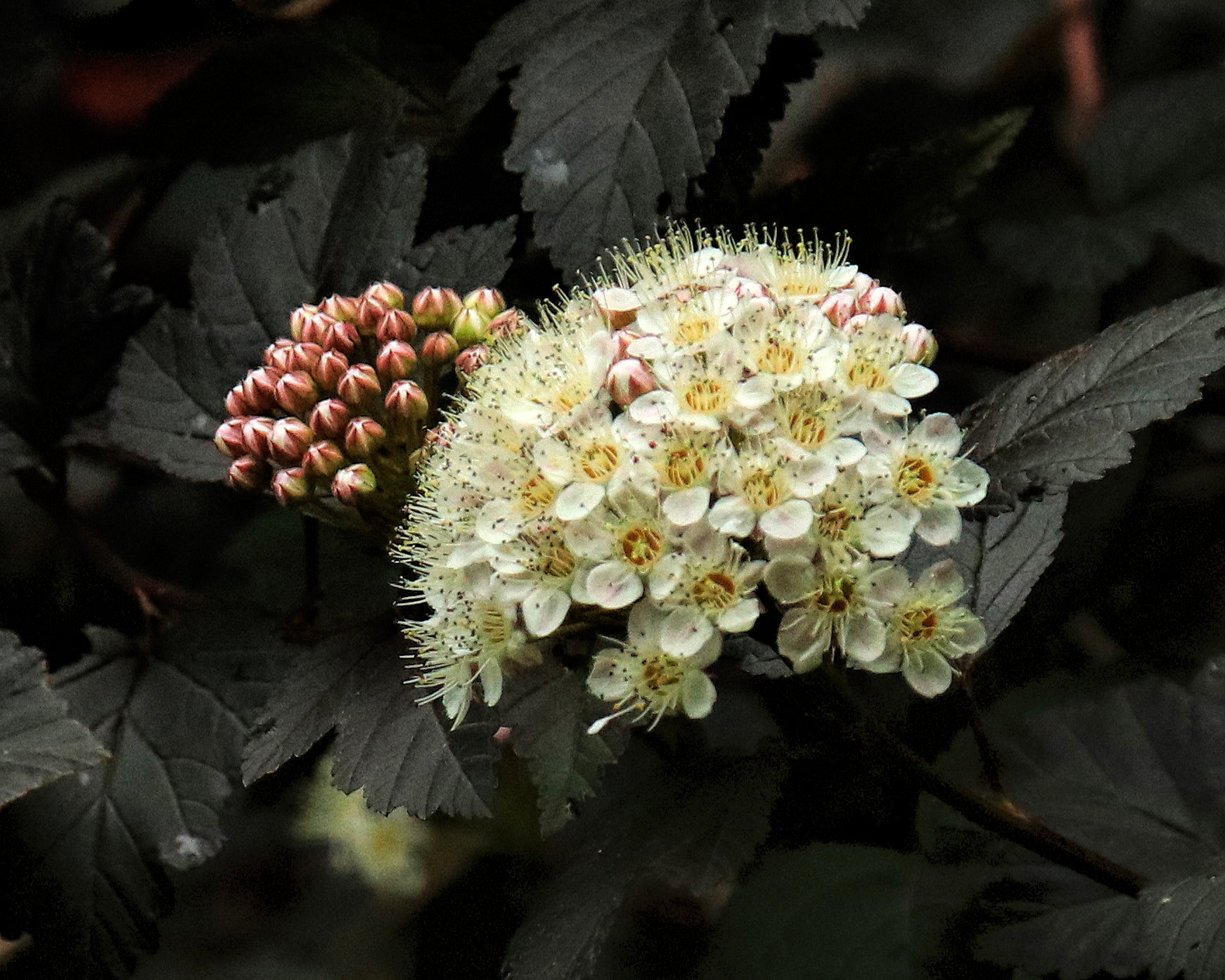
Today the Ninebark is highly valued landscape plant. While the plants with green leaves are still used it is the cultivars, such as ‘Rubio’, with rich purple foliage in summer that has garnered its place in many landscapes from the Pacific Northwest to the East Coast. The dense structure makes it perfect for hedges and screening. A single plant becomes a specimen that can create a focal point in the garden. Naturally as a native plant in our area, it is a welcome addition to any bird and pollinator friendly garden. An easy adaptable plant that will enrich any garden. So, whichever species you find the purple leaved cultivars can be found in most Nurseries and Garden Centers. Of course I recommend the Pacific Ninebark because it is our native species.