All Things Oregon – Winter Driving

By Christy Solo – Editor

While this winter has been relatively mild, we’ve definitely seen (or not seen due to fog) some slick road conditions of late. There is also a good chance we’ll see more snow over the next couple of months, especially in higher elevations. So this week’s All Things Oregon will be a reminder; we’ll focus on “Winter Safety Tips for Oregonians.”

No one wants to get stranded on I-5 for hours and hours in snowy or icy weather or lose power when the wind blows, but storms happen, we lose power a lot and Oregonians love to be prepared.

We’ll start with the most likely scenario: Be ready for power outages. A backup power source is ideal but those can be expensive (and remember, never ever, EVER use a generator indoors!)

If you have a wood stove or fireplace, now is the time to ensure your chimney is clean and your firewood is dry. Also stock up on candles and/or flashlights and batteries or kerosene for lamps. R.E.I. and similar stores sell hand crank battery chargers so you can have power for radios, cellular phones and other small devices. There are also chargers you can charge up with your car battery, then use to charge devices.

Even if your power stays on, your water may not. Pipes and pumps (if you’re on a well) freeze. Fun fact (I learned the hard way) it takes 3 gallons of water just to flush a toilet one time so keep several gallons of water on hand. A hard freeze can leave you without water for several days and you don’t realize just how much of it you use until you have none. So, if you think you might lose power or water, fill up your bathtub!

If traveling, always let someone know where you are going, when you are leaving, your route and when you anticipate arriving.

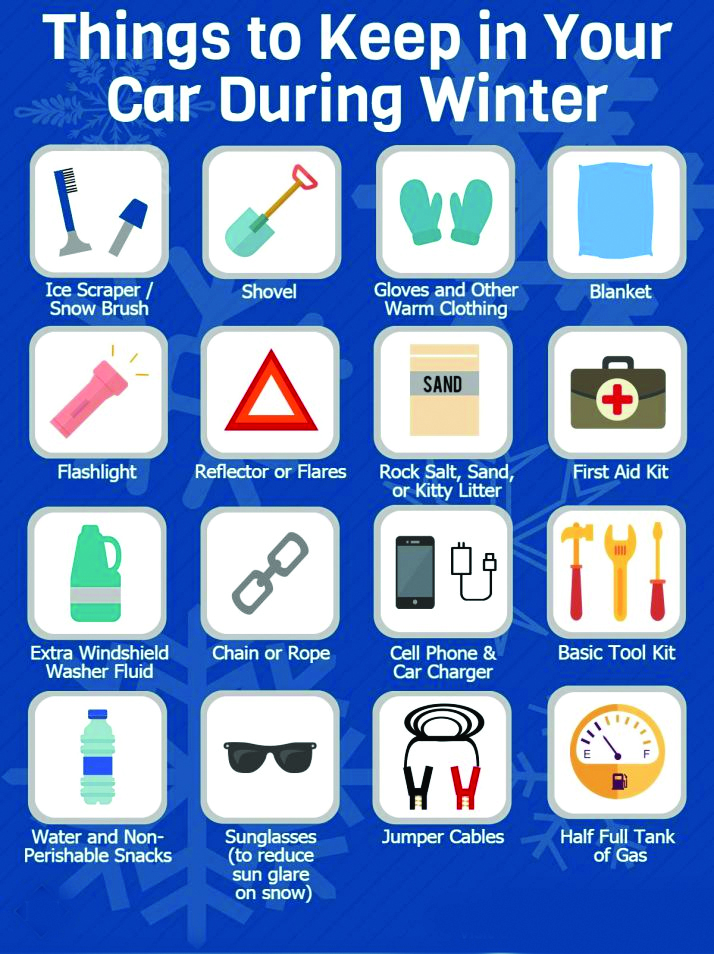
You also want to have your vehicle prepared for winter travel. Our area has a lot of windy roads with no cellular service and a patch of black ice can make even a short winter trip go very wrong very fast. Always keep a winter preparedness kit in your vehicle:

Personal Items:

  • Change of clothes
  • Hand warmers
  • Pair of boots and extra socks
  • Extra pair of gloves, a hat, scarf and jacket
  • Extra blanket
  • First-aid kit
  • Bottled water
  • Food – energy bars

Other useful items:

  • Battery powered radio
  • Jumper cables
  • Flares and flashlight
  • Lighter and matches
  • Small shovel
  • Ice scraper
  • Bag of kitty litter or sand to provide traction if you get stuck in the snow

Always check the weather before you travel and carry chains where required. Practice putting on chains at home, you do not want to learn how to do it on the side of an icy road.

Don’t trust GPS, check for road closures before you go to a new area. Recall the family that GPS stranded on Bear Camp Road a few years back.

Check https://tripcheck.com/ for the most accurate up to date information.

If you get trapped in your car due to severe weather or accident:

  • Remain in your vehicle where rescuers are most likely to find you.
  • Do not set out on foot unless you can see a building close by where you know you can take shelter but remember that distances can be distorted by blowing snow.
  • Run the engine and heater about 10 minutes each hour to keep warm. When the engine is running, open a downwind window slightly for ventilation. From time to time, clear snow from the exhaust pipe. This will protect you from possible carbon monoxide poisoning.
  • Exercise to maintain body heat but avoid doing too much.
  • Drink fluids to avoid dehydration. Do it over a period of time – not all at once.
  • Don’t waste battery power. Avoid the use of lights and radio and use the heat sparingly.
  • Turn on the inside light at night if you hear rescuers nearby. That way they can see you.

If you’re going out adventuring, hiking, fishing or hunting follow the travel rule of letting someone know where you are going, your route, and what time you plan on being home. Carry a few essentials with you in a pack. Extra gloves and socks, a lighter, matches (waterproof) or a fire starter, a compass, a whistle and a multi-purpose tool. Carry a cellular phone as well. Dress in layers and keep hydrated.

If you get lost, find or build the best shelter you can then stay put, build a fire and stay warm, stay hydrated and wait for rescue.