Crawlies with Cri – Bighorn Sheep

By Christy Solo – ONPA 1st Place Award Winner for Best Local Column

Bah, bah, big sheep, have you any wool? They don’t really. Meet this week’s crawly, the bighorn sheep (Ovis canadensis).

Our first fun fact about bighorn sheep is that while it’s true they do have big horns, they really are big all over. Technically they are considered “medium sized” bovids, which we’ll allow as the Family Bovidae also includes cattle, bison and buffalo.

How big are bighorn? Ewes weigh between 120 – 200 lbs. rams 150 – 250 lbs.

Okay, but how big are their big horns? Big. Seriously big. A male bighorns horns can weigh up to 30 lbs. That’s the same weight as all the other bones in their bodies combined.

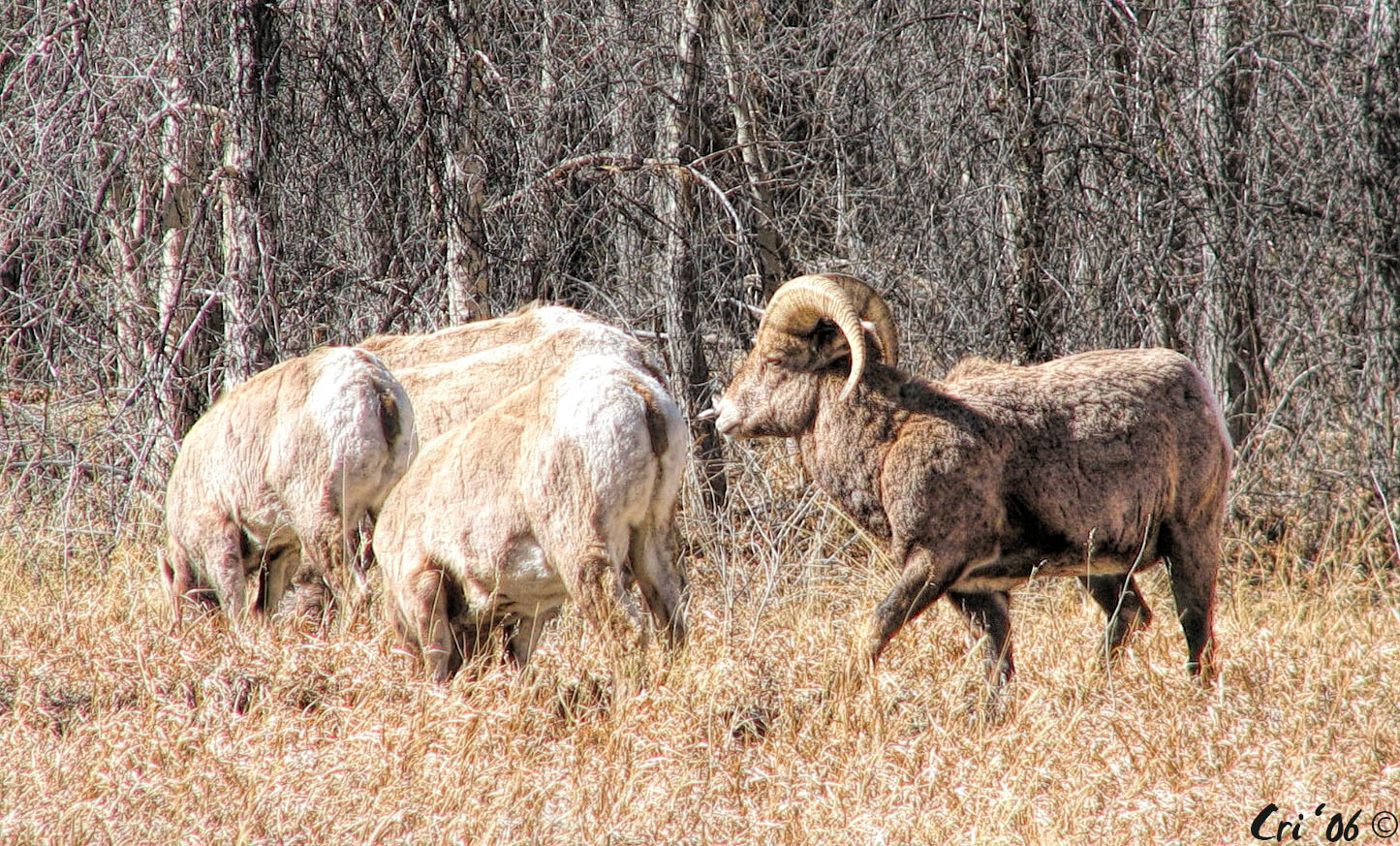
photo of three bighorn sheep in a dry grassy field.
Young male and female bighorn sheep. Photo by Christy Solo

Growing those horns takes time. Bighorn horns don’t reach “full curve” until the ram is about seven years of age. A mature male’s horns can grow up to three feet in length and have a one-foot circumference at the base.

Not so fun fact for our young rams: Because bighorn famously crack their horns together (a sound that can be heard up to a mile away!) to win the ladies during mating season, most bighorn rams have zero chance of mating until they hit that seven-year mark.

On the upside they have a decent lifespan for a prey animal with females averaging around 12 years and males around 10.

Female bighorn also sport horns, just not big ones. Both ewes and rams use their horns for defense and digging for food.

What does a 200 lb. sheep eat? Bighorn maintain their superbly athletic bodies on an all veggie diet, they graze and browse.

What now? Grazing is eating vegetation low to the ground, such as grasses. Browsing is eating higher growing plants such as leaves and bark from trees and shrubs.

Grasses eaten by bighorn include bluegrass, sedges, wheat grass, bromes and fescues. Browse includes willow, mountain mahogany, winterfat and bitter brush. Forbs include clover, cinquefoil and phlox (forbs are herbaceous plants).

All of this browsing and grazing is done in separate flocks. Bachelor flocks consist of, well exactly what the name implies, males. Well, males of a certain age that is. Young males (under four years) remain with their mothers in the ewe flock for at least two and up to four years before heading out to find some other bachelors to hang with.

It can take some time for the young rams to find a group of males, and they’ve been known to hang out with other species in the interim. It can be a lonely life for a young ram.

The flocks join up for rutting season – generally Oct. – Jan. then split up again, well right about now.

Bighorn can only be found in a few areas of Oregon, Baker, Gilliam, Grant, Harney, Lake, Malheur, Sherman and Wallowa counties. This is because they need a particular type of habitat to survive and thrive.

Obviously they need lots of grazing and browsing food stuffs, but what they really need are some open areas to feed with some nice, sheer, rocky cliffs nearby where they can bound to evade predators.

The inner part of bighorn hooves is soft, rubbery and grippy helping them easily maneuver along rocky ridges as small as two inches wide.

Fun fact: Baby bighorns can negotiate their flock’s treacherous terrain as well as the adults at a mere one day of age.

Final fun fact: Like other ruminants bighorns have four stomachs. It’s not just that they really like to savor their grassy meal, quad-tummies are literal life savers. Bighorn can hit the meadow and quickly fill up on vegetation, then head for the safety of the hills to leisurely fully chew and digest their meal.

photo of a female bighorn sheep on short, dry winter grass. she is facing right in profile, head turned looking at the camera. her mouth is slightly open as she chews.
Female bighorn sheep with grass so nice, she chews it twice. Photo by Christy Solo