Crawlies with Cri – Big-eyed Bugs

By Christy Solo – ONPA 1st Place Award Winner for Best Local Column

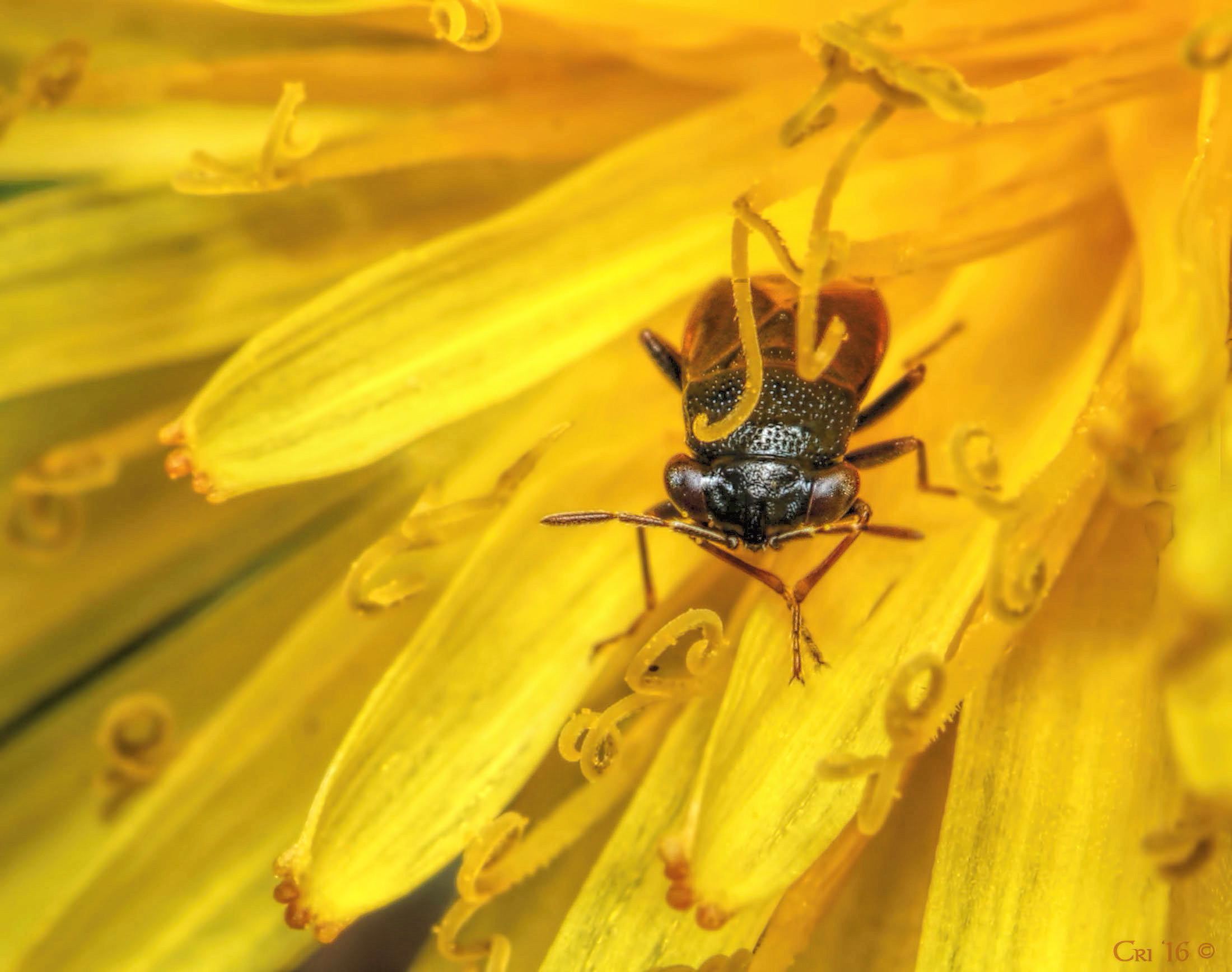
Bitty bug, big eyes, big benefit! Meet the big-eyed bug (Genus Geocoris).

At a mere 1/8 of an inch (3mm) the only big thing about big-eyed bugs are their eyes.

Well, okay, their eyes and their appetites! Which is why big-eyed are coveted garden and agricultural friends.

Both adult and nymphal (baby) big-eyed bugs dine on a wide variety of other “unwelcome” garden/agricultural arthropods such as whiteflies, mites, plant bugs, worms, aphids, moth eggs, leafhoppers, flea beetles, Lygus bugs, tobacco hornworm moth eggs, mites and stink bug nymphs – just to name a few – whew!

Big-eyed bugs are valued so highly in some agricultural circles that numerous ag colleges, websites, etc. have entire pages dedicated to these big-eyed besties.

The Northwest Potato Research Consortium – a cooperative of researchers from Washington, Idaho and Oregon – sings their praises and caution potato farmers that big-eyed bugs “are sensitive to many insecticides — care must be taken to preserve them.”

An article from the University of Maryland dubs big-eyed as “The MVP of generalist natural enemies.”

The broad diet of big-eyed bugs is one-third of what makes them varsity level garden partners, they will pretty much eat any arthropod they can attack and subdue. The second third is those big, big eyes. Their eye size and visual perception give them an expansive field of vision – the better to see their arthropod prey.

Speed completes the big-eyed bugs’ trifecta of predatory efficiency. Not only can they fly (as adults) but they are wicked fast sprinters as well – their prey just never sees them coming.

Here in Oregon, we have two species of Geocoris big-eyed bugs, the “none more black” Geocoris atricolor and the Western big-eyed bug (Geocoris pallens) who sport amber-colored legs and may have some brown or gray patterning on their head and back (see photos).

photo of an all black bug on a white porch railing. the bug is in profile facing right with one wing raised.
Adult Geocoris atricolor big-eyed bug. Photo by Christy Solo

As winged adults, big-eyed only live about a month, but don’t worry, that’s not bad news for your garden. Big-eyed are prolific and will have several generations from spring through early fall. Females will lay up to 300 eggs over their four-week adult life! If you’re lucky enough to have big-eyed bugs, you will always have plenty to tend your garden.

The kiddos who hatch from those eggs really chow down too. How much do they eat? A few examples: an individual big-eyed nymph can eat up to 1600 spider mites as they grow through their juvenile size stages. Adults slow down a little but still eat up to 80 mites per day. When it comes to eating “pest” moth eggs, big-eyed clean up there too. A juvie will eat about 250 moth eggs while growing and an adult will still tuck in four eggs per day.

photo of a black big eyed bug nymph on a white railing. they have one red and one yellow dot on the base of their abdomen.
Geocoris atricolor big-eyed bug nymph. Photo by Christy Solo

Big-eyed are key crop protectors contributing significantly to the success of cotton, soybeans, corn, peanuts, tomatoes and potatoes just to name a few.

In some instances, just the presence of big-eyed bugs is enough to stop pests in their tracks. Prey may stop feeding or fall off their host plant when big-eyed are around.

The last generation of big-eyed bug adults who mature in fall live longer than the spring and summer generations. They will hibernate and overwinter ready to start the process all over again early in spring. They are your ‘front line’ garden helpers.

Big-eyed are so effective at what they do folks are beginning to raise them like lady bugs for commercial use. Aren’t we lucky here in the Upper Rogue to have so many naturally?